AI Agents for Airlines: Use Cases, Benefits, and Better Customer Support
TL;DR
Airline disruptions create a surge of interconnected requests that traditional support systems struggle to handle efficiently. Flight cancellations often trigger rebooking, baggage, compensation, and service inquiries simultaneously, forcing customers through multiple queues and disconnected processes.
Airline customer support is tested most during disruptions.
A single cancellation can trigger rebooking requests, baggage questions, refund claims, missed connection issues, and loyalty queries at the same time. Each request often depends on data from separate systems, including booking platforms, fare rules, baggage tracking, and customer profiles.
During normal operations, agents can manage this complexity. During delays, cancellations, or weather events, request volume rises quickly while seat inventory, baggage status, and passenger options keep changing.
Traditional chatbots helped reduce basic FAQs, but they were not built to access live airline systems or complete actions such as rebooking, refund processing, or baggage case creation.
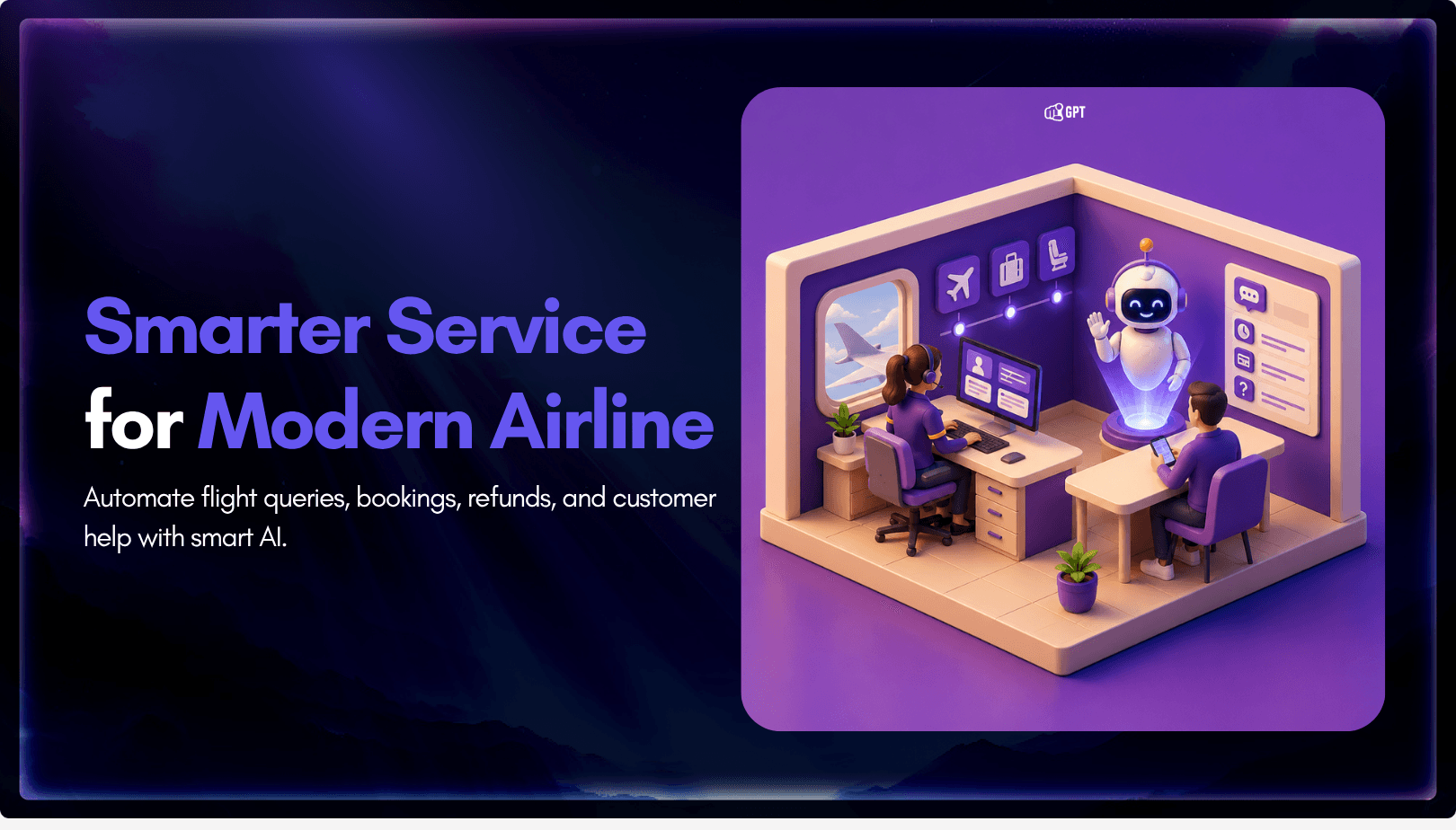
AI agents for airlines address this gap by connecting with operational systems and helping passengers complete tasks faster, while allowing human agents to focus on complex cases.
This blog explains where airline support breaks during disruption, how AI agents help, and what airlines should look for before choosing a solution.
What Is an AI Agent for Airlines
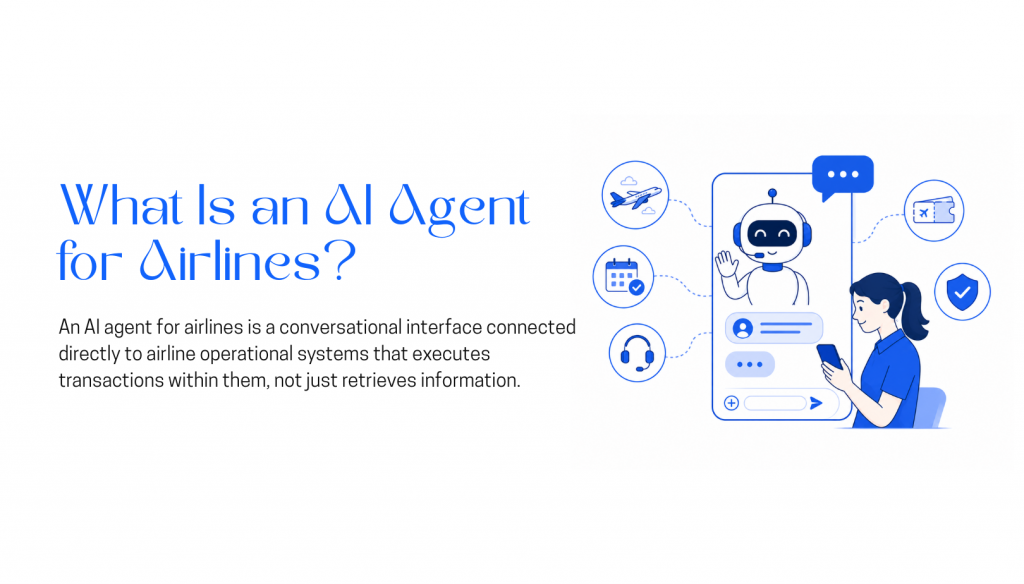
An AI agent for airlines is a customer support system that can understand passenger requests, connect with airline operational systems, and complete tasks inside those systems.
Unlike a basic chatbot, an AI agent does not only provide information. It can take action. For example, it can check a passenger’s booking, review fare rules, find available flight options, start a refund request, trace baggage, or update customer records.
This matters because many airline support requests depend on live operational data. A passenger asking to change a flight may need seat availability, ticket rules, disruption waivers, loyalty status, and payment details checked before the request can be completed.
A useful airline AI agent should be able to:
- Read live data from booking, baggage, inventory, loyalty, and flight operation systems.
- Apply airline policies such as fare rules, refund conditions, waiver rules, and compensation eligibility.
- Complete structured actions like rebooking, refund initiation, baggage case creation, or profile updates.
- Handle multiple requests together when passengers ask about rebooking, baggage, refunds, and onward travel in one conversation.
- Escalate complex cases to human agents with full context, so passengers do not need to repeat the same information.
In simple terms, an AI agent becomes useful when it moves beyond answering questions and starts helping passengers complete real support tasks.
Airline Support Challenges During Service Interruptions
Airline support does not usually fail because teams lack effort. It fails because Interruptions creates many connected problems at once.
When a flight is delayed or cancelled, passengers need answers about rebooking, baggage, refunds, compensation, missed connections, seat changes, and onward travel. Each request may require data from a different system, such as the Passenger Service System, fare engine, baggage platform, loyalty CRM, or departure control system.
This becomes harder during disruption because the situation keeps changing. Seat availability can disappear within minutes. Baggage status may update after a passenger has already contacted support. Waiver rules may apply to some passengers but not others. Agents must check several systems while queues continue to grow.
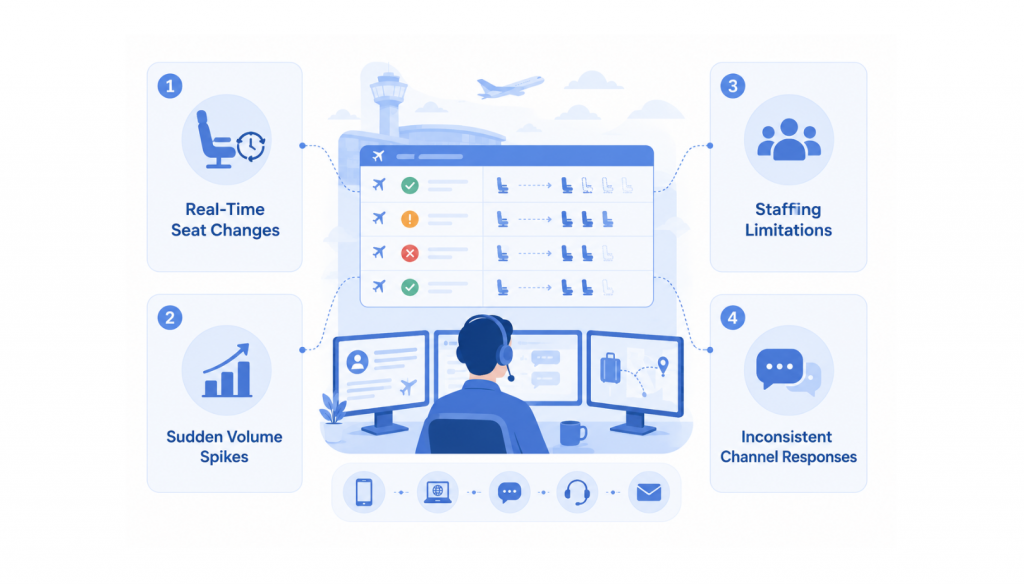
Four issues usually create the biggest pressure:
- Seat availability changes in real time: Rebooking options can change while agents are still checking passenger details, fare rules, or connection options. A seat available at the start of a conversation may no longer be available by the time the agent is ready to confirm the change.
- Support volume rises faster than teams can respond: A cancelled flight, aircraft change, or weather delay can create hundreds of passenger requests in a short period. When passengers cannot get an answer quickly, they often try another channel, which increases duplicate contacts and adds more pressure to the queue.
- Staffing cannot scale instantly: Airlines cannot train new agents during the event itself. Even experienced agents need time to handle complex rebooking, refund, baggage, and policy cases accurately.
- Different channels may give different answers: Mobile apps, websites, chat, and contact centers often use different workflows or data sources. This can lead to inconsistent information, causing passengers to contact support again for clarification.
As a result, airline support may work well on normal days but struggle when passenger requests increase quickly and systems are not connected enough to respond in real time.
The Limits of Traditional Chatbots in Airline Support
Airlines adopted rule-based chatbots to reduce support workload, but most were built for simple questions rather than operational problem-solving. They could answer FAQs, explain policies, or direct passengers to help pages. But during delays, cancellations, or missed connections, passengers need more than information. They need systems that can check live data, apply airline rules, and complete actions.
Key limitations included:
- No access to live airline systems: Rule-based chatbots usually relied on static content, so they could not check real-time seat availability, baggage status, booking records, ticket conditions, or flight changes.
- Limited ability to resolve requests: Passengers often needed rebooking, refunds, baggage claims, or compensation checks. Most chatbots could explain the next step but could not complete the request.
- Weak multi-request handling: A passenger may ask about rebooking, baggage, compensation, and onward travel in one conversation. Rule-based bots usually handled one intent at a time, forcing passengers to repeat themselves.
- Poor performance during urgent situations: When flight status, seat availability, or baggage location changes quickly, scripted answers become less useful. Passengers still need a human agent for accurate, current decisions.
- High maintenance effort: Fare rules, waiver policies, route changes, and regulations change often. Updating every chatbot flow manually made it difficult to keep answers accurate across markets.
- More handoffs instead of fewer contacts: When a chatbot could not complete the task, the passenger was transferred to an agent. This added another step to the journey without reducing the support queue.
The result was that traditional chatbots reduced basic FAQ volume, but they did little for the high-pressure cases that create the biggest workload for airline support teams.
Use Cases for Airline AI Agents
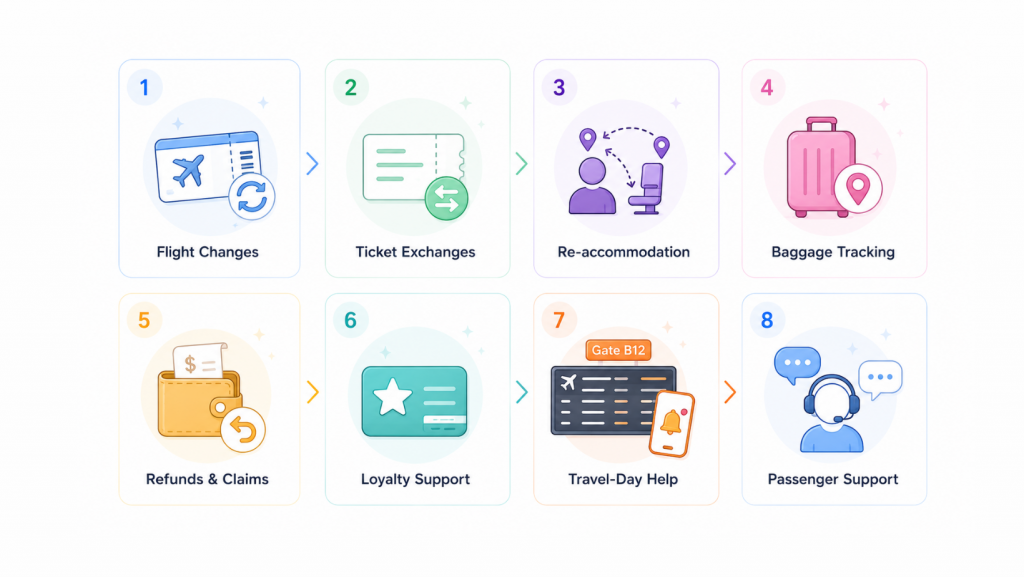
AI agents create the most value when they move beyond basic answers and help airlines manage passenger requests, customer engagement, and support workflows that require live data, policy checks, and action across connected systems.
Key applications include:
- Flight changes and rebooking: AI agents can review booking details, fare conditions, disruption waivers, and seat availability to help passengers find suitable alternative travel options.
- Ticket revalidation and exchanges: When itinerary changes require ticket updates, AI agents can check eligibility, apply fare rules, and support reservation updates within connected airline systems.
- Passenger re-accommodation: During delays, cancellations, or schedule changes, AI agents can identify affected bookings and assist passengers according to airline policies.
- Baggage tracking and claims: AI agents can connect with baggage systems to provide status updates, expected delivery information, and support baggage-related service requests.
- Refund and compensation requests: AI agents can review fare conditions, disruption reasons, and applicable policies to guide passengers through refund or compensation workflows.
- Loyalty and frequent flyer support: AI agents can help with missing mileage claims, tier status questions, profile updates, upgrade requests, and partner airline loyalty inquiries.
- Day-of-travel assistance: AI agents can provide flight status, gate changes, boarding updates, and seat reassignment information before passengers need to contact support.
- Passenger engagement and support: AI agents can answer questions, recommend next steps, and provide timely updates across the travel journey, improving the passenger experience while reducing avoidable support requests.
The value increases when these tasks are handled in one conversation. A passenger with a cancelled flight may need rebooking, baggage information, refund guidance, and travel updates at the same time. AI agents can bring these workflows together for a faster and more connected support experience.
Benefits of AI Agents in Airline Support
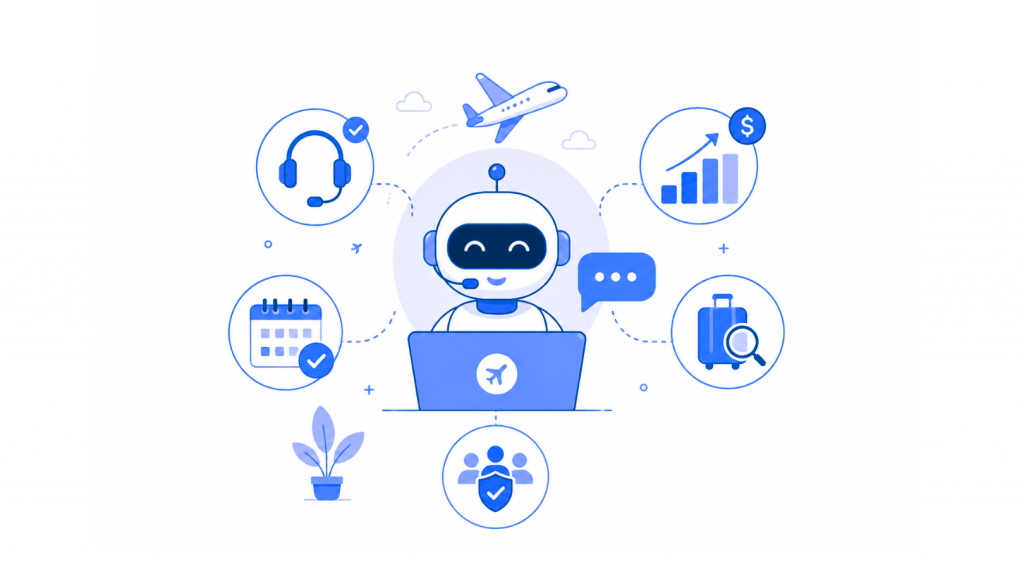
AI agents help airlines do more than automate customer service. When connected to airline systems, they can improve support efficiency, reduce operational pressure, and help passengers resolve issues faster across multiple channels. Unlike traditional travel chatbots that primarily answer questions, AI agents can assist with real support workflows and actions.
For airlines, these benefits show up in several areas:
- Reduced support workload: AI agents can handle a large share of routine requests, allowing support teams to focus on complex cases that require human judgment and expertise.
- Faster resolution times: Passengers can receive assistance with rebooking, baggage inquiries, refund requests, and travel updates without waiting in long support queues.
- Consistent policy application: AI agents follow the same airline rules and workflows across channels, reducing inconsistencies in compensation decisions, fare policies, and passenger communications.
- Lower repeat contact rates: When passengers receive complete assistance in a single interaction, they are less likely to contact support multiple times for the same issue.
- Improved customer experience: Real-time assistance, proactive travel updates, and personalized support help passengers stay informed throughout their journey, especially during delays or schedule changes.
- Scalable support during peak demand: AI agents can manage large increases in passenger requests during cancellations, weather disruptions, seasonal travel peaks, and other operational challenges without requiring additional staffing.
- Better utilization of support teams: By automating repetitive tasks, airlines can allocate experienced agents to high-priority, sensitive, or exception-based cases.
- Higher operational efficiency: Faster handling of passenger requests helps reduce queue backlogs, improve response times, and streamline support operations across channels.
As passenger expectations continue to rise, AI agents are becoming an important part of modern airline support strategies. They help airlines deliver faster, more consistent service while improving customer experience and maintaining operational efficiency at scale.
How AI Agents Connect with Airline Systems
AI agents become more powerful when they connect with real airline systems instead of only answering static FAQs. Passengers need help with bookings, missed connections, baggage updates, refunds, seat changes, loyalty points, and disruption alerts all of which require live operational data.
This is what makes an AI agent different from a basic airline chatbot. A chatbot can explain a refund policy, while an AI agent can understand the passenger’s booking context, check fare rules, collect missing details, and route complex cases to the right team when human approval is needed.
To support this, airline AI agents can integrate with key systems such as:
- Passenger Service System: Access booking details, passenger records, ticket status, and itinerary information.
- Global Distribution System: Support fare availability, reservation data, and travel agency booking context.
- Departure Control System: Assist with check-in, boarding passes, seat assignments, and departure workflows.
- Baggage Tracking Systems: Provide updates on delayed baggage, lost baggage, claim status, and mishandled baggage cases.
- Loyalty Systems: Answer member-specific queries about miles, tier status, benefits, upgrades, and rewards.
- Refund and Compensation Workflows: Check fare rules, cancellation policies, claim eligibility, and refund status.
For airlines, these integrations improve support during both regular travel days and disruption periods. During delays, cancellations, weather issues, or IROPS, an AI agent can manage high query volumes, provide faster updates, reduce support workload, and escalate only the cases that need human attention.
With YourGPT, airlines can build AI agents that connect passenger conversations with real workflows, helping deliver faster, more personalized, and more reliable travel support.
Choosing the Right AI Agent for Airline Support
Airline support requires more than a general customer service tool. Passengers often need help with booking changes, baggage updates, refunds, loyalty queries, and day-of-travel issues that depend on live operational data.
The right AI agent should connect with airline systems, understand support workflows, and assist passenger requests that involve real-time data, policy decisions, and secure actions.
Airlines should evaluate these areas:
- Live system connectivity: The AI agent should connect with booking records, fare rules, seat inventory, baggage platforms, and loyalty databases. Cached or delayed data can lead to inaccurate answers when flight status or availability changes quickly.
- Workflow-based automation: The system should support actions such as flight changes, refund requests, baggage case creation, and customer profile updates. This is especially important for an AI chatbot for travel booking, where passengers expect help with search, changes, cancellations, and trip support in one flow.
- Multi-request handling: A passenger may ask about rebooking, baggage, compensation, and onward travel in the same conversation. The AI agent should handle these connected needs within a single workflow.
- Smooth human handoff: When a case needs an agent, the handoff should include conversation history, booking context, passenger details, and actions already attempted.
- Performance during peak demand: The AI agent should be tested for high-volume travel scenarios such as cancellations, weather events, and seasonal travel peaks.
- Compliance and control: Airlines should be able to define policies, approval rules, escalation paths, and audit logs to keep support consistent and secure.
Selecting the right AI agent is about more than adding ai automation to support channels. It requires a system that can work with airline operations, support passenger journeys in real time, and escalate complex cases with the right context.
Frequently Asked Questions
What are AI agents for airlines? ▼
AI agents are intelligent assistants that help airlines answer passenger questions and complete tasks like rebooking flights, tracking baggage, checking refunds, and managing travel changes.
How do AI agents improve airline customer support? ▼
They reduce wait times, handle common requests instantly, and give passengers faster help during delays, cancellations, or peak travel periods.
Can AI agents rebook flights automatically? ▼
Yes. When connected to airline booking and fare systems, AI agents can check available flights, apply airline rules, and complete rebooking for eligible passengers.
What airline tasks can AI agents handle? ▼
AI agents can support flight changes, cancellations, baggage tracking, refund requests, seat updates, loyalty queries, travel alerts, and handoffs to human agents.
Do AI agents replace human airline support teams? ▼
No. AI agents handle repetitive and structured requests, while human agents manage complex, sensitive, or exception-based cases.
What is the biggest benefit of AI agents for airlines? ▼
The biggest benefit is faster, more consistent customer support. Airlines can serve more passengers at once while reducing pressure on support teams.
Conclusion
Airline support becomes harder when delays, cancellations, baggage issues, and travel changes create high passenger demand at the same time. In these moments, airlines need more than basic automation; they need systems that can respond with accurate information and support real actions.
AI agents help by connecting support workflows with live airline data, allowing passengers to complete tasks such as rebooking, baggage tracking, refund checks, and travel updates with less friction.
For airlines, this means shorter queues, fewer repeat contacts, and better use of support teams during peak pressure. For passengers, it means faster answers and a smoother experience when travel plans change.
YourGPT helps airlines build AI agents that improve support efficiency, reduce service bottlenecks, and create a more connected passenger experience across the travel journey.
Faster Airline Support with AI Agents
YourGPT helps airlines support passengers with quick answers for flight status, bookings, baggage, cancellations, refunds, and travel updates across every channel.

Related posts