18 Lead Generation Strategies & Tactics That Work in 2026
TL;DR
Lead generation in 2026 works best with a multi-channel system, not isolated tactics. This blog covers 18 proven strategies and 12 optimizations used by top teams.
You will learn how to combine AI, outbound, content, and community to build predictable lead flow at any scale.
Lead generation is the lifeblood of every business. Without a steady stream of qualified prospects, even the best products and services struggle to find their market. Yet in 2026, the landscape has become increasingly complex. Buyers are more informed, competition is fiercer, and traditional tactics that worked just a few years ago are delivering diminishing returns.
If you are reading this, you are probably facing one or more of these challenges: inconsistent lead volume, disappointing conversion rates, climbing cost per acquisition, or a sales team frustrated with low-quality leads that never convert. You are not alone. These are the exact pain points that businesses worldwide are tackling with smarter, more systematic approaches.
This comprehensive blog is different from generic listicles. Every strategy included here is backed by real data, tested across different industries, and proven to deliver results in 2026. Whether you are a startup founder, a marketing manager hitting aggressive targets, or a sales leader building predictable pipeline, you will find actionable strategies you can implement immediately.
Why Lead Generation Makes or Breaks Your Business
Most businesses do not fail from a lack of demand. They fail because they capture the wrong leads, qualify them poorly, or let them fade after the first interaction.
Research consistently shows that nearly 80% of new leads never turn into sales. This is not a traffic problem. It is a quality and execution problem. Companies that struggle focus on generating more leads, while companies that scale focus on attracting the right prospects and knowing how to convert them.
Lead generation sits at the center of growth. Without it, sales pipelines shrink, forecasting becomes unreliable, and revenue depends on unpredictable spikes instead of steady momentum. Yet despite being a top priority for marketing teams, results often fall short.
The reasons are predictable. Teams chase volume instead of intent, spread efforts across too many channels, and fail to build consistent follow-up systems. Leads are captured but not properly qualified. Sales teams receive contact lists instead of buyers ready for real conversations.
Buyer behavior has changed. Prospects now research independently, compare options quietly, and delay direct contact until confidence is high. By the time a form is submitted, expectations are already set. Slow, generic, or poorly timed responses break trust immediately.
This is why lead generation now determines whether a business grows or stalls. When done well, it creates predictable pipeline, shorter sales cycles, and stronger customer relationships. When done poorly, it inflates metrics without producing revenue.
The strategies in this breakdown focus on what drives results today: attracting real buying intent, engaging at the right moment, and turning interest into qualified pipeline rather than vanity metrics.
What Are Lead Generation Strategies (And Why Most Fail)
A lead generation strategy is a structured approach to attracting potential buyers, capturing their interest, and moving them toward a qualified sales conversation. The idea itself is simple. Executing it well is where most teams struggle.
Many businesses generate leads consistently and still fail to grow. That is because lead generation is not just about acquisition. It is about alignment between audience, intent, and follow-up. When any of these breaks, results collapse.
Most lead generation efforts fail for three predictable reasons.
1. Wrong channel for the audience
Even strong offers fail when they appear in the wrong place. Each audience has preferred platforms and behaviors. When teams ignore this and push campaigns into channels their buyers rarely use, performance drops before optimization even begins. Channel and audience alignment is not optional. It is foundational.
2. Obsession with quantity over quality
High lead counts look impressive on dashboards, but they often hide a deeper issue. Marketing celebrates volume while sales discovers most leads lack budget, authority, or urgency. This creates friction between teams and slows revenue. Fewer, better-qualified leads almost always outperform large volumes of low-intent interest.
3. No system for what happens next
Capturing a lead is only the starting point. Without structured follow-up, qualification, and nurturing, even strong leads lose momentum quickly. Delays, generic responses, or inconsistent outreach cause prospects to disengage. Modern lead generation requires systems that respond quickly, adapt to behavior, and guide leads forward instead of leaving them idle.
The strategies that follow are designed to solve all three problems by aligning channels with buyers, prioritizing intent over volume, and building repeatable systems that turn interest into pipeline.
Inbound vs Outbound Lead Generation: Stop Picking Sides
One of the most common mistakes teams make is treating inbound and outbound as opposing choices. In reality, they solve different problems.
Inbound builds long-term leverage. Outbound creates pipeline on demand. High-performing companies in 2026 use both, adjusting the balance based on deal size, sales cycle, and growth pressure.
A simple decision framework helps clarify where to lean.
- Lean inbound when deal sizes are lower, sales cycles are short, and you can afford time for compounding results.
- Lean outbound when targeting larger accounts, longer sales cycles, or when pipeline is needed quickly.
Inbound attracts demand over time. Outbound activates demand immediately. The most successful teams combine both, shifting emphasis as the business evolves rather than committing to one approach permanently.
18 Lead Generation Strategies That Actually Work in 2026
Below are eighteen proven lead generation strategies that focus on intent, timing, and conversion quality. Each one is designed to help you attract the right prospects and turn interest into qualified pipeline.
1. Content marketing
Modern buyers research solutions independently before ever speaking to sales. Content marketing positions your business as the answer they find when searching for solutions to their problems.
Publishing high-quality content that ranks in search engines attracts organic traffic from people actively looking for what you offer. Instead of interrupting buyers, you become the resource they discover.
How to apply this effectively
- Create blog posts, guides, or videos that solve a real problem paired with a signup or download
- Target high-intent keywords that indicate buying readiness, not just information gathering
- Use content upgrades and lead magnets within articles to capture contact information
- Optimize for featured snippets and “People Also Ask” sections to increase visibility
- Build topic clusters that establish authority and improve search rankings over time
Starting with content that solves real problems builds trust, generates consistent inbound leads, and creates compounding returns as older content continues to attract traffic.compounding returns as older content continues to attract traffic.
2. Lead magnets
Prospects will exchange contact information for content they perceive as valuable. Lead magnets attract qualified leads who are actively seeking solutions to specific problems.
Gated content filters out casual browsers and captures information from people genuinely interested in your subject matter and potential solutions.
How to apply this effectively
- Create freebies like checklists, templates, calculators, or mini-courses in exchange for email addresses
- Focus on resources that solve immediate, specific problems your prospects face
- Keep forms short, asking only for information you will actually use
- Deliver the promised resource immediately to build trust
- Follow up with nurture sequences that continue providing value
Starting with strategic lead magnets attracts self-qualified prospects, builds your email list with engaged contacts, and creates natural entry points into your sales process.
3. Email marketing
Most leads are not ready to buy immediately. Email nurturing keeps your solution top of mind while educating prospects and building trust over time.
Automated email sequences deliver the right message at the right stage of the buyer journey. Well-executed campaigns convert subscribers into qualified leads without requiring constant manual effort.
How to apply this effectively
- Build nurture sequences, newsletters, and re-engagement campaigns that convert subscribers into leads
- Segment your email list based on behaviors, interests, and stage in the buying process
- Use personalization beyond just first names, reference specific actions or interests
- Test subject lines, send times, and calls to action to optimize performance
- Track engagement metrics to identify hot leads who are ready for sales contact
Starting with strategic email nurturing keeps prospects engaged, shortens the time to conversion, and ensures no interested buyer falls through the cracks.
4. Social media (organic)
Social platforms are where prospects spend time, engage with content, and build awareness of solutions. Consistent presence keeps your brand visible when buying decisions happen.
Organic social builds relationships over time while creating multiple touchpoints that move prospects closer to conversion without paid advertising costs.
How to apply this effectively
- Share value-packed posts, carousels, short videos, and clear CTAs pointing to a signup or DM
- Focus on platforms where your ideal customers are actually active
- Engage with comments and messages to build relationships
- Share valuable insights and educational content, not constant self-promotion
- Test different content formats to see what resonates with your audience
Starting with focused organic social efforts builds brand awareness, establishes thought leadership, and creates multiple touchpoints that warm up prospects over time.
5. Paid ads (Google, Meta, LinkedIn, etc.)
Organic strategies take time to build momentum. Paid advertising delivers immediate visibility and traffic to your offers when targeting and messaging are aligned with audience intent.
Platforms like Google, LinkedIn, and Facebook allow precise targeting based on demographics, behaviors, and interests. This ensures your message reaches the right people at the right time.
How to apply this effectively
- Run highly targeted ads with a focused landing page that work great for quick scale
- Define clear audience segments based on your ideal customer profile
- Test multiple ad variations to identify what resonates with your audience
- Use retargeting to re-engage visitors who didn’t convert on their first visit
- Monitor cost per lead and conversion rates to optimize budget allocation
Starting with targeted paid campaigns accelerates pipeline growth, provides immediate data on what works, and complements longer-term strategies.
6. Landing pages
Your website is often the first impression prospects have of your business. If it fails to clearly communicate value or makes conversion difficult, you lose leads before conversations begin.
Landing pages designed for specific campaigns or offers convert significantly better than sending traffic to generic homepage content.
How to apply this effectively
- Create simple, conversion-optimized pages with one goal: capture contact info
- Remove navigation and distractions that lead visitors away from conversion
- Use compelling headlines that speak directly to prospect pain points
- Include social proof like testimonials, case studies, and client logos
- A/B test headlines, form length, images, and CTAs to continuously improve conversion rates
Starting with optimized pages captures more of the traffic you already have, reduces wasted ad spend, and improves ROI on all marketing efforts.
7. SEO (search engine optimization)
Buyers research solutions independently before reaching out to vendors. SEO ensures your business appears when prospects are actively searching for answers to their problems.
Ranking for high-intent keywords connects you with prospects who are further along in their buying journey and more likely to convert.
How to apply this effectively
- Rank for high-intent keywords people are already searching for
- Target keywords that indicate buying readiness, not just information gathering
- Optimize existing pages and create new content to fill gaps in your keyword coverage
- Build high-quality backlinks to improve domain authority
- Monitor rankings and adjust strategy based on what’s working
Starting with SEO generates consistent, compounding traffic from prospects actively looking for solutions, reducing dependence on paid channels.
8. Webinars / live workshops
Webinars position you as an expert while creating real-time engagement with prospects. Attendees raise their hands by registering, signaling genuine interest in your topic and solution.
Live events create urgency and interaction that recorded content cannot match. The registration process naturally qualifies leads based on their willingness to commit time.
How to apply this effectively
- Teach something valuable live and collect registrations as leads
- Choose topics that address pressing challenges your ideal customers face
- Promote webinars through email, social media, and paid ads to reach your target audience
- Deliver genuine value during the event, not just a sales pitch
- Follow up immediately with attendees and no-shows with relevant next steps
Starting with educational webinars attracts engaged prospects, builds authority, and creates natural opportunities for sales conversations.
9. Cold outreach (email or LinkedIn)
Cold outreach still works when it is targeted, personalized, and focused on the prospect’s needs rather than your product features.
The key is relevance. Reaching out to the right people with messaging that demonstrates you understand their specific situation creates conversations that generic blasts never will.
How to apply this effectively
- Send personalized, relevant messages to your ideal customer, not spammy blasts
- Build targeted lists of prospects who closely match your ideal customer profile
- Research prospects to personalize messaging based on their company, role, or recent activities
- Lead with value or insight rather than immediate sales pitches
- Follow up persistently but respectfully, adding new value in each touchpoint
Starting with thoughtful cold outreach fills pipeline gaps quickly, reaches prospects who aren’t actively searching, and complements inbound efforts.
10. Referral Programs
Your existing customers already understand the value you provide. Referrals from satisfied customers convert at higher rates and have shorter sales cycles than cold leads.
Structured referral programs make it easy for customers to recommend you while providing incentives that motivate them to actually follow through.
How to apply this effectively
- Incentivize existing customers or contacts to refer new leads
- Create a simple process for customers to submit referrals
- Offer meaningful incentives for both the referrer and the referred prospect
- Ask for referrals at natural moments like after successful project completion
- Track and follow up on referrals quickly to show you value the introduction
Starting with a formal referral program leverages your happiest customers, generates pre-qualified leads, and reduces acquisition costs.
11. Partnerships & co-marketing
Partnerships with complementary businesses provide access to established audiences who already trust your partner. Co-marketing splits costs while multiplying reach.
Joint webinars, content, or campaigns introduce your solution to prospects who are already primed to value what you offer because they trust the partner making the introduction.
How to apply this effectively
- Collaborate with complementary brands to share audiences
- Identify businesses that serve the same audience but offer complementary solutions
- Propose specific collaboration ideas like joint webinars, content, or bundle offers
- Cross-promote to both audiences through email, social, and other channels
- Track results separately to understand which partnerships deliver the best ROI
Starting with strategic partnerships accelerates audience growth, adds credibility through association, and generates leads at lower costs than solo efforts.
12. Free trials or demos
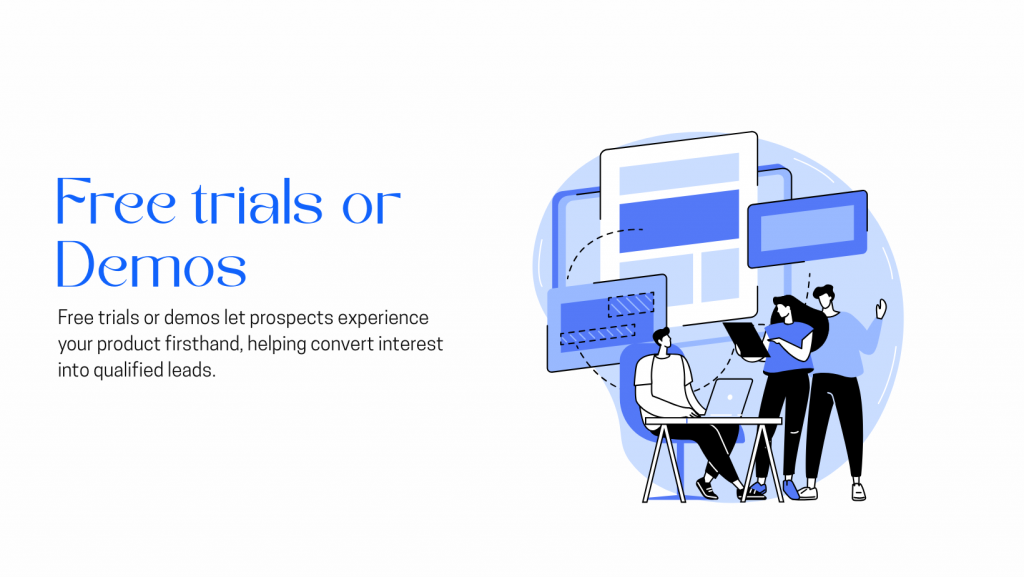
For many products and services, experiencing the value firsthand removes doubt faster than any marketing message. Trials and demos let prospects see exactly what they’re buying.
This strategy works especially well for software and services where the value becomes clear through hands-on experience.
How to apply this effectively
- Let prospects experience your product or service before committing
- Make the signup process simple with minimal friction
- Provide onboarding support to ensure prospects experience key value quickly
- Follow up strategically during the trial period to answer questions and demonstrate features
- Use trial behavior data to identify and prioritize high-intent prospects
Starting with trials or demos reduces perceived risk, accelerates decision-making, and converts prospects who need to see proof before buying.
13. Events (online or in-person)
Events create concentrated opportunities to meet prospects face-to-face or screen-to-screen. The attendees are pre-qualified by their willingness to invest time in the topic.
Whether conferences, meetups, or trade shows, events generate high-quality leads because conversations happen in real-time with context already established.
How to apply this effectively
- Attend or host conferences, meetups, or trade shows that generate high-quality leads
- Choose events where your ideal customers will actually be present
- Prepare specific talking points and offers relevant to the event audience
- Collect contact information systematically and follow up within 48 hours
- Use events to build relationships, not just collect business cards
Starting with strategic event participation puts you in front of engaged prospects, builds relationships faster, and creates memorable interactions that stand out.
14. Chatbots & live chat
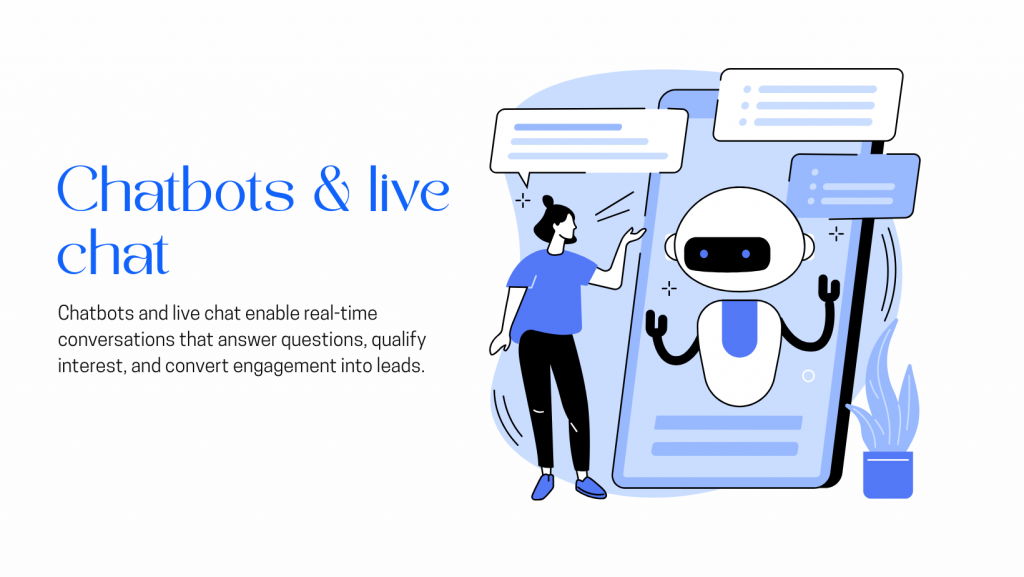
Website visitors often have questions that prevent them from converting. Live chat and chatbots provide immediate answers, capture contact information, and qualify leads while prospects are actively engaged.
Automated chat can handle common questions 24/7 while routing high-priority inquiries to human team members in real time.
How to apply this effectively
- Capture leads directly from website visitors while they’re engaged
- Deploy chat on high-traffic pages like pricing, product pages, and blog posts
- Use chatbots to qualify visitors with strategic questions before connecting to sales
- Capture contact information early in conversations for follow-up
- Monitor chat transcripts to identify common questions and objections
Starting with chat functionality reduces friction, captures leads who might otherwise leave, and provides valuable insights into what prospects need to know.
15. Customer reviews & testimonials
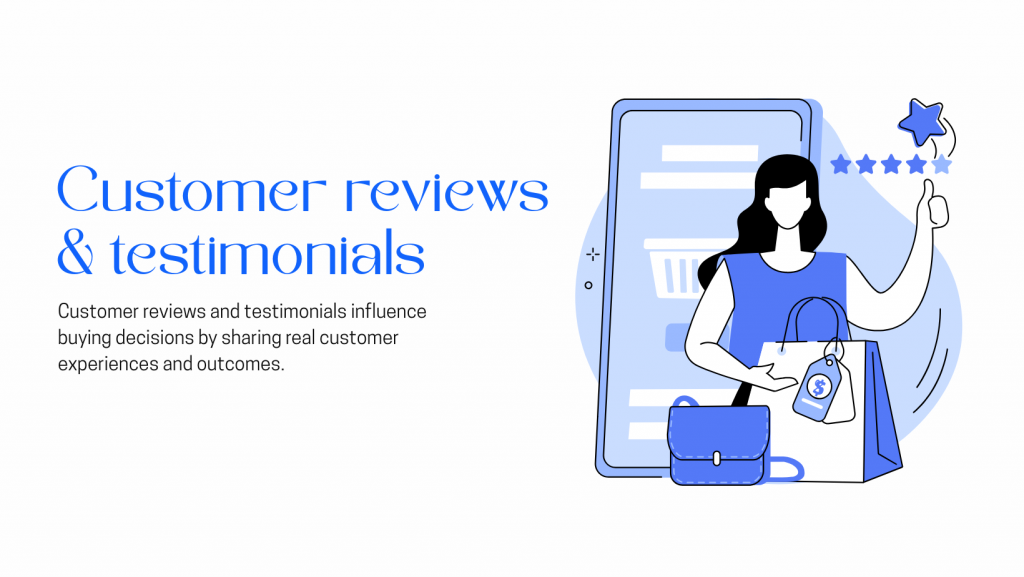
Prospects research extensively before making decisions. Reviews, testimonials, and case studies provide the social proof needed to overcome skepticism and build trust.
Positive reviews on third-party platforms and on your own site dramatically increase conversion rates by showing that others have succeeded with your solution.
How to apply this effectively
- Use social proof to build trust and boost conversion rates across channels
- Systematically request reviews from satisfied customers at natural points in their journey
- Feature detailed case studies that demonstrate clear results and ROI
- Display testimonials prominently on landing pages and throughout your website
- Respond professionally to all reviews, both positive and negative
Starting with strong social proof reduces friction in the buying process, increases conversion rates across all channels, and differentiates you from competitors.
16. Interactive content
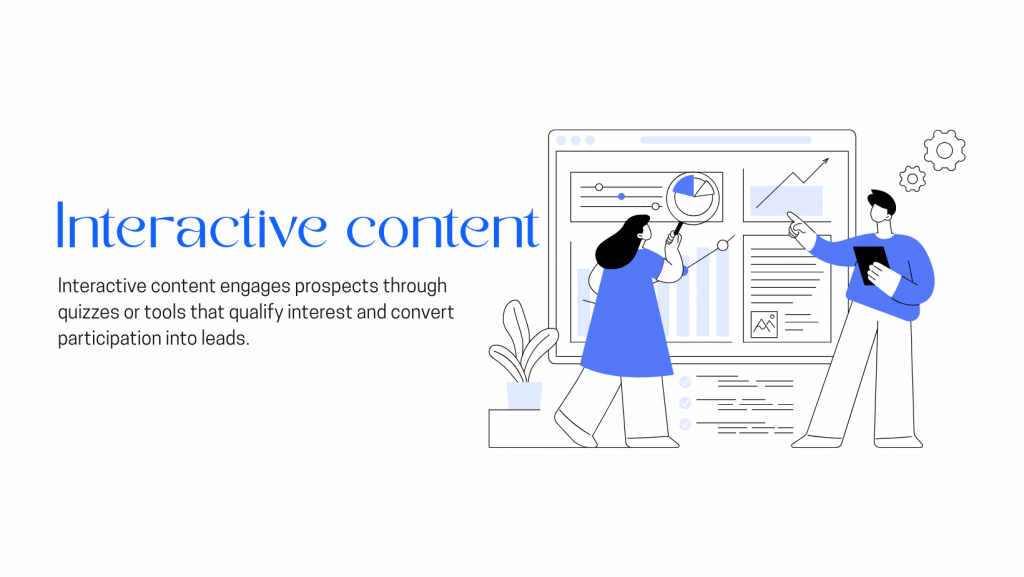
Interactive content like quizzes, assessments, and calculators engages prospects while collecting valuable information about their needs and challenges.
People are more willing to share contact information when they receive personalized results or insights in return. Interactive tools also qualify leads based on their specific situations.
How to apply this effectively
- Create quizzes, assessments, or “find out your score” tools that collect emails before showing results
- Design tools that help prospects understand their current situation or potential ROI
- Use quiz or assessment responses to segment and personalize follow-up
- Share results that provide genuine value, not just sales pitches
- Promote interactive content through paid ads and social media for maximum reach
Starting with interactive content increases engagement, provides qualification data, and creates natural opportunities for personalized follow-up.
17. Retargeting campaigns
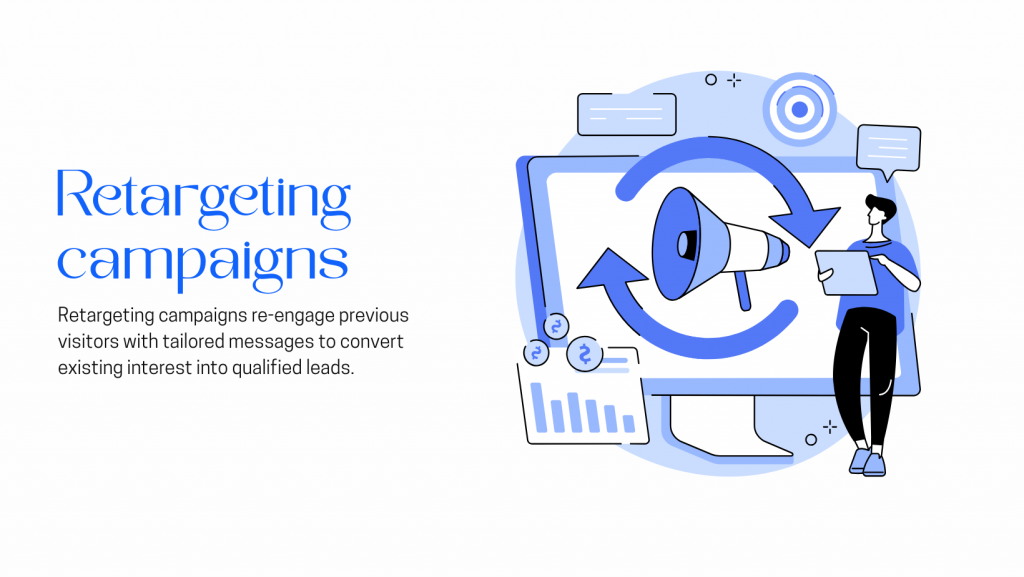
Most visitors don’t convert on their first visit. Retargeting keeps your brand in front of prospects who showed interest but didn’t take action.
These campaigns work because they target people who already have context about your solution. They just need additional touchpoints to move forward.
How to apply this effectively
- Show ads to people who visited your site or engaged with your content but didn’t convert
- Segment retargeting audiences based on which pages they visited or actions they took
- Create specific ads that address likely objections or highlight different value propositions
- Set frequency caps to avoid overwhelming prospects with too many ads
- Test different messages and offers to see what brings people back
Starting with retargeting campaigns captures lost opportunities, improves overall conversion rates, and maximizes the value of traffic you’ve already paid to attract.
18. Online communities
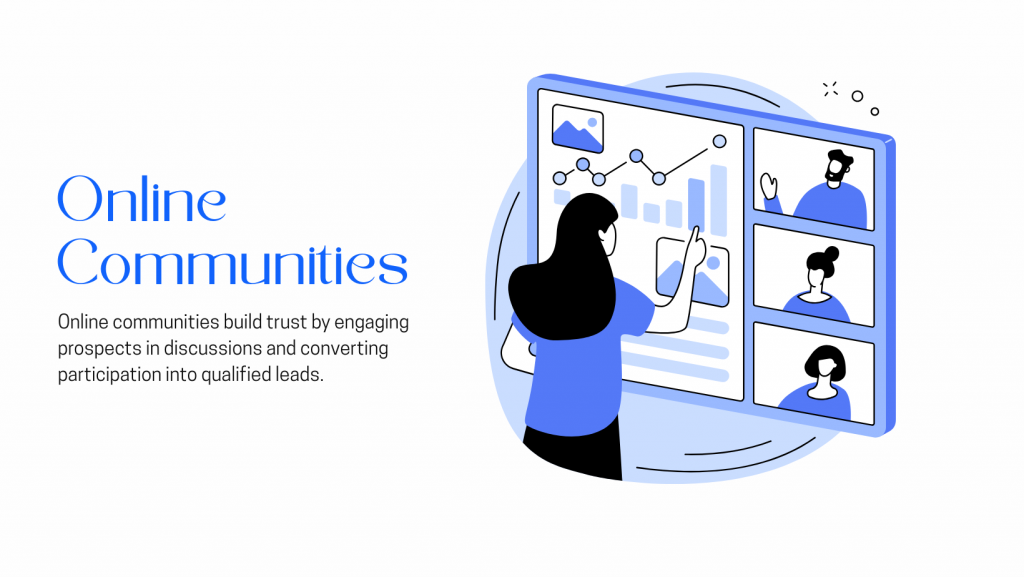
Building or participating in communities positions you as a trusted resource rather than just another vendor. Prospects in communities are already engaged and seeking solutions.
Consistent, valuable participation builds relationships over time. When community members need what you offer, you become the obvious choice because trust already exists.
How to apply this effectively
- Build or participate in Slack groups, Discords, Reddit, or Facebook groups and offer value first. Leads follow.
- Join existing communities where your ideal customers gather
- Contribute genuinely helpful insights without constantly promoting your product
- Create your own community if there is a clear gap in your industry
- Identify active, engaged members who fit your ICP for direct outreach
Starting with community engagement builds authentic relationships, establishes credibility, and creates a pool of warm leads who already trust you.
7 Lead Generation Mistakes to Avoid in 2026
Even strong lead generation strategies break down when execution slips. These mistakes show up repeatedly across SaaS, B2B services, and product-led teams, and they are usually the reason pipelines look busy but revenue stays flat.
1. Targeting Everyone Instead of the Right Buyer
When your audience is too broad, messaging becomes vague and conversion drops fast. Many teams run campaigns without clearly defining who the offer is actually for. The result is traffic and signups from people who were never going to buy.
Effective lead generation starts with a narrow ideal customer profile and expands only after conversion data supports it.
2. Optimizing for Lead Volume Instead of Intent
More leads feel good in dashboards, but they often create friction downstream. Sales teams end up chasing contacts with no budget, no urgency, or no decision power.
The mistake is measuring success by how many leads you collect instead of how many progress into real conversations.
3. Capturing Leads Without a Clear Next Step
Many funnels stop at the form. A lead downloads a resource or signs up, then receives a generic follow-up days later, if at all. At that point, momentum is gone.
Every lead capture should immediately trigger qualification, context-aware follow-up, or guided next actions.
4. Treating All Leads the Same
Not every lead deserves the same response. Someone who viewed pricing, requested a demo, or returned multiple times signals higher intent than someone who skimmed a blog post.
Failing to prioritize leads based on behavior causes high-intent prospects to wait while low-intent ones get equal attention.
5. Relying on Single-Channel Lead Generation
Putting all effort into one channel creates fragile growth. Algorithms change. Costs rise. Performance dips.
Teams that grow steadily distribute effort across a few proven channels and let performance data decide where to scale.
6. Over-Automating Without Context
Automation saves time, but generic automation loses trust. When outreach feels templated or disconnected from user behavior, engagement drops sharply.
Automation should support relevance, not replace it. The goal is faster response with better context, not more messages.
7. Ignoring Conversion and Feedback Loops
Many teams launch campaigns but rarely revisit what actually converted. They track clicks and signups, but not sales outcomes or lead quality feedback from sales.
Without closing the loop, the same mistakes repeat and lead generation stalls quietly.
Most lead generation problems are not tactical. They are systemic. Fixing these mistakes improves lead quality, sales alignment, and conversion rates without increasing spend.
If you avoid these pitfalls, lead generation stops feeling unpredictable and starts becoming a repeatable growth system.
FAQ
What is the difference between inbound and outbound lead generation, and which should I use?▼
Inbound lead generation attracts prospects through content, search, and social media. Outbound lead generation involves proactively contacting leads via email, ads, or messaging. Most businesses benefit from both. Inbound supports long-term growth, while outbound helps generate faster pipeline and target high-value accounts.
What is lead generation?▼
Lead generation is the process of attracting and capturing potential customers who show interest in your product or service. The goal is to turn interest into qualified conversations that can lead to revenue.
How long does it take to see real results?▼
Paid ads can generate leads within days or weeks. SEO and content often take 3 to 6 months to gain traction and 9 to 12 months to become predictable. Consistency and iteration are what make results durable.
Why do most leads never convert into customers?▼
Most leads fail to convert due to weak qualification, unclear targeting, or slow follow-up. Many teams capture contacts without confirming intent, then send generic outreach that does not match the lead’s needs or timing.
What is the difference between an MQL and an SQL?▼
A Marketing Qualified Lead (MQL) has shown interest, such as downloading a resource or attending a webinar. A Sales Qualified Lead (SQL) meets buying criteria like urgency, fit, and readiness to speak with sales.
How many lead generation strategies should I use at once?▼
Start with two or three channels that match your audience and your resources. Once you can generate consistent leads and conversions from those channels, expand carefully instead of spreading effort too thin.
What is the most common lead generation mistake?▼
Chasing lead volume instead of lead quality. A large list means little if prospects are not a good fit or not ready to buy. Strong targeting and clear qualification improve conversion far more than more traffic.
How do I know if my lead generation is working?▼
Track outcomes, not just form fills. Watch lead-to-opportunity rate, cost per qualified lead, close rate by channel, and sales feedback. If lead volume is high but revenue is flat, targeting or nurturing needs work.
Should I offer free trials or demos?▼
Yes when your product benefits from hands-on evaluation. Trials and demos perform best when onboarding is simple, value is visible quickly, and follow-up happens while the prospect is active.
How much should I spend on lead generation?▼
Budget should be tied to customer lifetime value and your target acquisition cost, not a fixed rule. Start small, measure cost per qualified lead and conversion to revenue, then scale what produces profit.
What should I do first if I am starting from zero?▼
Start by defining your ideal customer profile, then pick one inbound channel and one outbound channel. Build a simple conversion path with a landing page, one strong offer, and a consistent follow-up process.
Conclusion
We have covered a lot, but the core takeaway is simple. Lead generation rarely fails due to a lack of ideas. It fails when tactics are executed without clear intent signals, consistent qualification, or a system that ties effort directly to revenue.
The strategies outlined above work in 2026 because they reflect how buyers actually behave. Prospects research on their own, compare options quietly, and engage only when a solution clearly fits their needs. Teams that grow consistently optimize for timing and relevance, not raw lead volume or surface-level engagement.
Where most companies struggle is execution. Leads are captured but not prioritized. Follow-ups are delayed or generic. Sales teams receive lists of contacts instead of conversations with real buying context. Automating early qualification and response helps prevent high-intent leads from going cold, which is where platforms such as YourGPT can support teams by handling real-time engagement without adding manual overhead.
Sustainable lead generation comes from building a repeatable system that filters for intent, responds quickly, and creates a clean handoff between marketing and sales. When this system is in place, pipeline becomes predictable, sales cycles shorten, and teams spend less time chasing noise and more time closing real opportunities.
Turn Leads Into Real Conversations
Getting leads is easy. Qualifying them, responding on time, and routing the right prospects to sales is where most teams lose momentum. YourGPT helps automate that layer without disrupting your existing workflow.
Built for modern lead generation • No coding required • Works across chat and channels

Related posts

AI Customer Service Platform: Complete 2026 Guide for Support Teams