AI Chatbots in Hotel Operations: Use Cases and Benefits
Hotel guests don’t wait for business hours to ask questions. They message whenever it’s convenient for them, which is usually when your staff aren’t available to respond. If they don’t hear back quickly, they book elsewhere.
The requests themselves are rarely complicated. Guests want to know about availability, check-in procedures, whether pets are allowed, or how to modify a reservation. Your team could handle these in moments, but they’re often tied up with other tasks when the messages come through. The problem isn’t complexity, it’s capacity and timing.
AI chatbots fill this gap by responding immediately across whichever channel guests prefer. They handle routine questions, guide people through bookings, and can suggest upgrades without requiring staff intervention. Hotels that implement them properly see more enquiries convert to direct bookings, mainly because they’ve eliminated response delays.
This blog covers how chatbots are actually being used in hotel operations, where they create measurable value, and what you need to know before implementing one. The focus is on practical applications and real outcomes, not theoretical possibilities.
What Is a Hotel AI Chatbot?
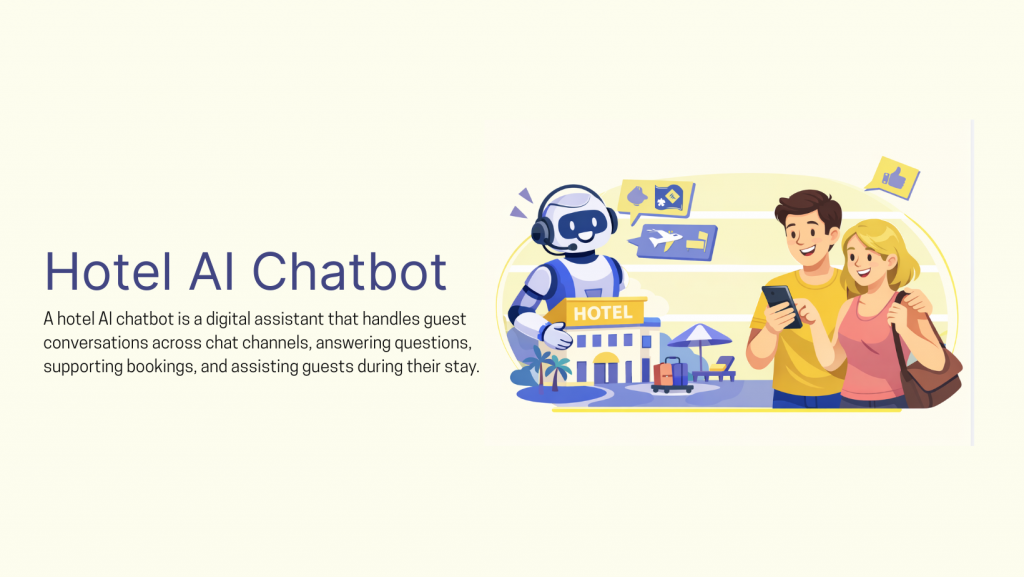
A hotel AI chatbot is a conversational interface that handles guest communication across digital channels including websites, WhatsApp, and messaging platforms. It processes enquiries, manages booking requests, and provides assistance throughout the guest journey using real-time property data.
The technology interprets guest intent from natural language input and maintains context across multi-turn conversations. When integrated with property management systems, the chatbot accesses current availability, pricing, reservation details, and service information to generate accurate responses. Routine interactions are resolved autonomously, whilst requests requiring human judgement are escalated to staff with conversation history intact.
How Hotel AI Chatbots Function
When a guest initiates contact, the chatbot processes the message to identify the request type and retrieves relevant information from connected hotel systems. The response generation adapts to guest language, handles follow-up questions within the same session, and maintains conversation continuity across channel switches.
Core operational components:
- Message processing – Identifies request type such as availability checks, reservation modifications, service requests, or property information queries.
- Data retrieval – Queries property management systems, channel managers, and customer databases to access current availability, pricing, and guest profiles
- Personalisation – References stored preferences and booking history for returning guests, including room type preferences and previous stay details.
- System integration – Connects to property management software, channel managers, CRM platforms, and service management tools to ensure responses reflect real-time property status.
- Escalation handling – Transfers conversations requiring human judgement to staff with full context preserved, maintaining continuity of service.
Hotel chatbots operate continuously without shift limitations, processing multiple conversations simultaneously across channels whilst maintaining response accuracy and context awareness.
Benefits of AI Chatbots in Hotel Operations
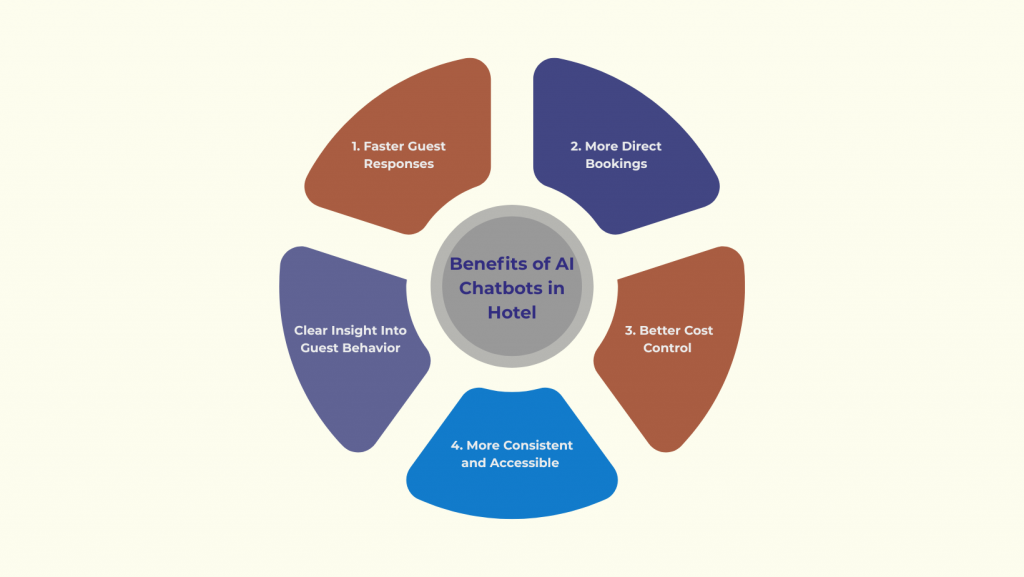
AI chatbots improve hotel operations by simplifying guest communication at scale. Their impact is most visible in response speed, booking performance, cost control, and the consistency of service delivered across channels.
1. Faster Guest Responses Without Overloading Staff
Guest inquiries arrive throughout the day, often outside standard operating hours. AI chatbots allow hotels to respond instantly to common questions without depending on staff availability. This reduces wait times, keeps conversations active, and prevents booking inquiries from going unanswered during peak or late-night periods.
By handling predictable questions such as check-in times, amenities, policies, and directions, chatbots reduce pressure on front desk and reservations teams. Staff spend less time switching between phones, emails, and chats, and more time focused on guests who need in-person attention.
2. More Direct Bookings From Ongoing Conversations
Many booking decisions are delayed because guests wait too long for answers. Chatbots keep conversations moving by responding immediately to availability, pricing, and policy questions. This helps convert interest into direct bookings instead of pushing guests toward third-party platforms.
Chat-based conversations also create natural moments to suggest upgrades or add-ons, such as early check-in, room upgrades, or dining options. When offers are presented in context, they feel helpful rather than promotional and contribute to higher booking value without aggressive selling.
3. Better Cost Control as Guest Volume Increases
As inquiry volume grows, chatbots absorb much of the additional communication without requiring proportional increases in staffing. This allows hotels to scale guest support while keeping operational costs predictable.
Chatbots are especially useful during seasonal peaks, when hiring and training temporary staff is costly and time-consuming. Automated responses also reduce errors caused by inconsistent information across shifts, lowering the time spent correcting misunderstandings or handling follow-up complaints.
4. A More Consistent and Accessible Guest Experience
Guests benefit from faster, more consistent responses across chat channels. Chatbots provide the same information regardless of time, shift, or language, reducing confusion and improving trust.
Multilingual chatbots allows hotels to assist international guests without relying on multilingual staff at all times. Messaging-based support also aligns with modern guest preferences, as many travelers now choose chat over phone calls for simple questions and requests.
5. Clear Insight Into Guest Behavior and Service Gaps
Every chatbot interaction creates data that hotels can use to understand what guests ask most often, where confusion occurs, and which questions delay bookings. These insights help improve pre-arrival communication, website content, and internal processes.
Chat-based feedback collection also tends to receive higher response rates than traditional email surveys, especially when feedback is requested naturally during or shortly after a stay. Over time, conversation data helps hotels anticipate guest needs and address issues before they impact the experience.
9 Essential Use Cases for Hotel Chatbots
Hotel chatbots create the most value when applied at points where guest decisions, revenue opportunities, and service quality are most affected. The following use cases are ordered by operational and financial impact.
1. 24/7 Booking Enquiries and Pre-Booking Questions
Guests researching hotels contact properties at all hours, often comparing multiple options simultaneously. Chatbots respond instantly to questions about availability, room types, amenities, policies, pricing, and rate differences between booking channels.
The guest who receives an immediate answer is far more likely to book than one waiting until morning for a response. This use case directly protects revenue that would otherwise go to competitors or online travel agencies with automated systems already in place.
2. Group Bookings and Event Enquiries
Group reservations, wedding blocks, and event bookings represent high-value opportunities that often start with initial questions about capacity, pricing, and availability. Chatbots collect essential details such as dates, guest count, room requirements, and event needs before routing to sales teams with structured information. This ensures no group enquiry goes unanswered during evenings or weekends when sales staff aren’t available, and gives teams qualified leads rather than cold contacts.
3. Reservation Changes and Cancellations
Date modifications, room type switches, guest count adjustments, and cancellation questions make up a significant portion of staff workload. Chatbots provide immediate answers based on booking conditions, process simple changes automatically, and escalate complex requests with full context. This eliminates email backlogs, reduces response delays from hours to seconds, and frees staff to handle situations requiring judgement.
4. In-Stay Service Requests
Guests use chat to request housekeeping, report maintenance issues, order room service, or ask for amenities. Chatbots collect structured information including room number, request type, and urgency before routing to the appropriate department.
This creates clear accountability, reduces miscommunication between teams, and ensures requests don’t get lost in handoffs. The guest receives confirmation their request was logged, and staff get actionable details rather than vague messages.
5. Check-In and Check-Out Information
Questions about check-in procedures, required documents, deposit policies, parking locations, and check-out times are predictable and high-volume. Chatbots handle these instantly, often proactively sending details as arrival approaches. For properties with mobile check-in, chatbots guide guests through the process and troubleshoot common issues. This reduces front desk queues and allows staff to focus on guests who need personal assistance.
6. Local Recommendations and Concierge Support
Guests ask about restaurants, attractions, transportation, events, and directions throughout their stay. Chatbots provide tailored suggestions based on preferences, make restaurant recommendations, explain transport options, and share local information. Whilst this doesn’t replace a skilled concierge for complex itinerary planning, it handles routine questions that would otherwise interrupt staff during peak periods.
7. Payment and Billing Clarification
Confusion about deposits, incidental holds, authorization amounts, and charges causes check-in delays and dissatisfaction. Chatbots explain payment procedures before arrival, clarify charges during the stay, and provide billing breakdowns at checkout. Setting clear expectations early prevents declined cards, front desk bottlenecks, and post-departure disputes requiring follow-up from accounting teams.
8. Service Recovery and Issue Resolution
When problems arise, the information quality determines resolution speed. Chatbots collect structured details about issues including timing, location, nature of the problem, and guest expectations before escalation. Managers receive complete context rather than fragmented complaints, enabling faster decisions about compensation or corrective action. Addressing concerns whilst the guest is still on property often prevents negative reviews and preserves future booking potential.
9. Multilingual Guest Communication
Properties serving international guests face language barriers that slow communication and create misunderstandings. Chatbots operate in multiple languages simultaneously, allowing guests to ask questions and receive assistance in their preferred language without waiting for multilingual staff availability. This expands market reach and improves service consistency for non-English speaking guests.
Build Your Customer Support AI Chatbot for Hotels with YourGPT
Deploying a functional customer support chatbot for hotels requires structured implementation across knowledge training, conversation design, channel integration, and performance monitoring. The following methodology applies to most AI chatbot platforms serving the hospitality sector.
1. Connect Your Knowledge Sources
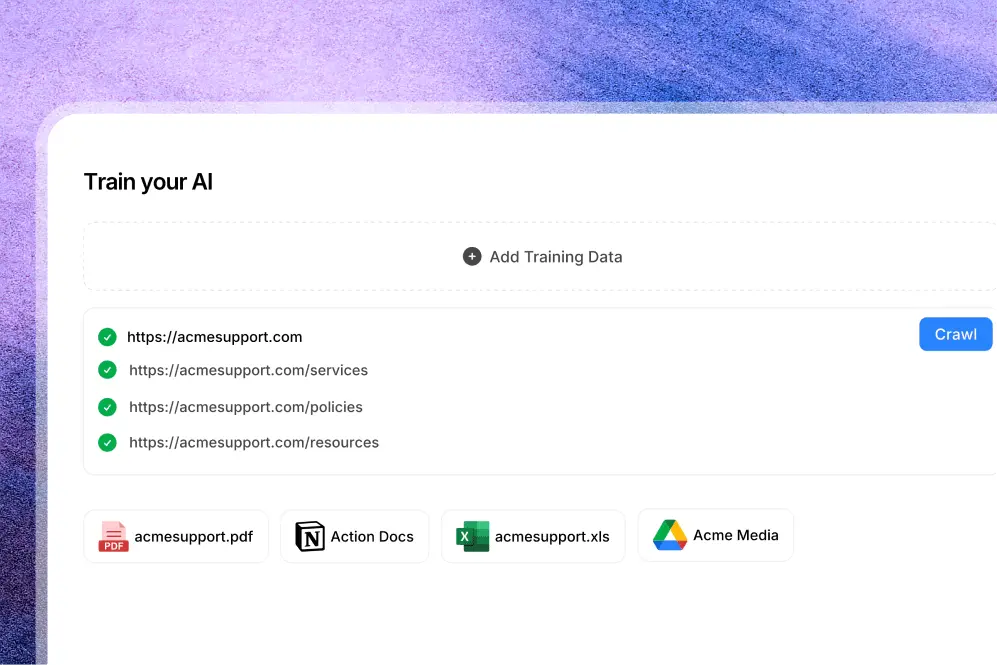
The next step involves connecting the chatbot to authoritative property information. Upload website content, standard operating procedures, policy documentation, service descriptions, and frequently asked questions. The system indexes this material to generate responses grounded in actual property data rather than generic hospitality content.
Effective knowledge bases typically include:
- Room categories, amenities, and property facilities
- Booking policies, cancellation terms, and payment procedures
- Service hours, contact information, and location details
- Local area information and guest service protocols
The accuracy of chatbot responses correlates directly with the completeness and currency of source documentation. Properties should establish processes for updating knowledge bases when policies, services, or operational details change.
2. Customize the Experience for Your Brand
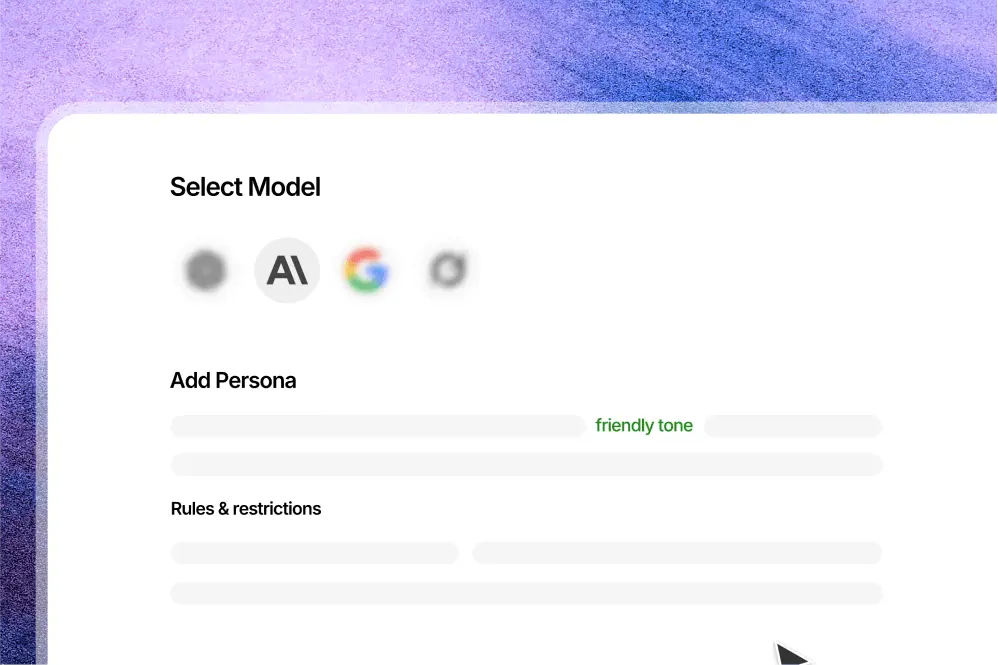
Define how your chatbot communicates with guests by setting its tone, personality, and response style to match your brand voice. Customize the chatbot’s visual appearance including colors, positioning, and branding elements for a consistent guest experience.
For hotels requiring advanced control over conversation handling, YourGPT’s AI Studio provides a visual interface to build custom workflows without coding. This allows you to design specific conversation paths, integrate with external systems through API calls, create dynamic responses with interactive elements, and execute custom logic for complex guest scenarios. AI Studio is optional but useful for properties with unique operational requirements that extend beyond standard chatbot capabilities.
Enable escalation to route conversations to your team when needed. The chatbot will automatically transfer guests to available staff members for situations requiring human assistance, keeping the conversation context intact during handoff.
3. Deploy Across Your Support Channels
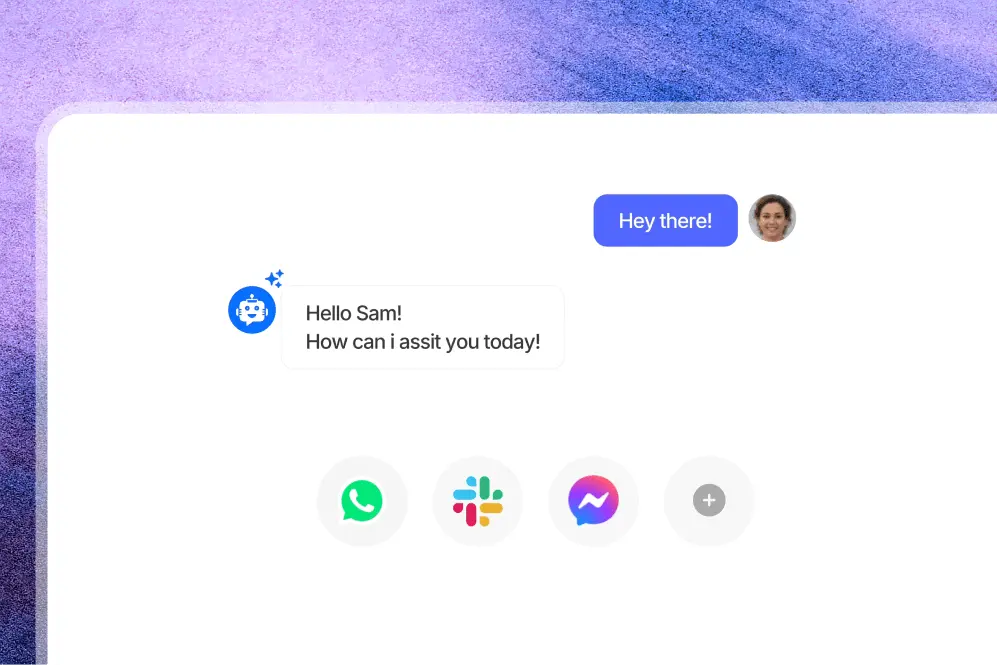
Deploy the chatbot across guest touchpoints including property websites, mobile applications, and messaging platforms. Integration with existing property management systems, customer relationship platforms, and reservation systems allows the chatbot to access real-time availability, pricing, and guest profile information.
Standard deployment channels include:
- Website chat widgets on booking, property, and support pages
- WhatsApp for messaging-based enquiries
- Facebook Messenger and Instagram for social media support
- Email integration for asynchronous communication
- Help desk systems for internal ticket routing
Technical integration typically requires API connections between the chatbot platform and hotel systems to enable data exchange for availability checks, reservation lookups, and guest history access.
4. Monitor Performance and Improve Over Time
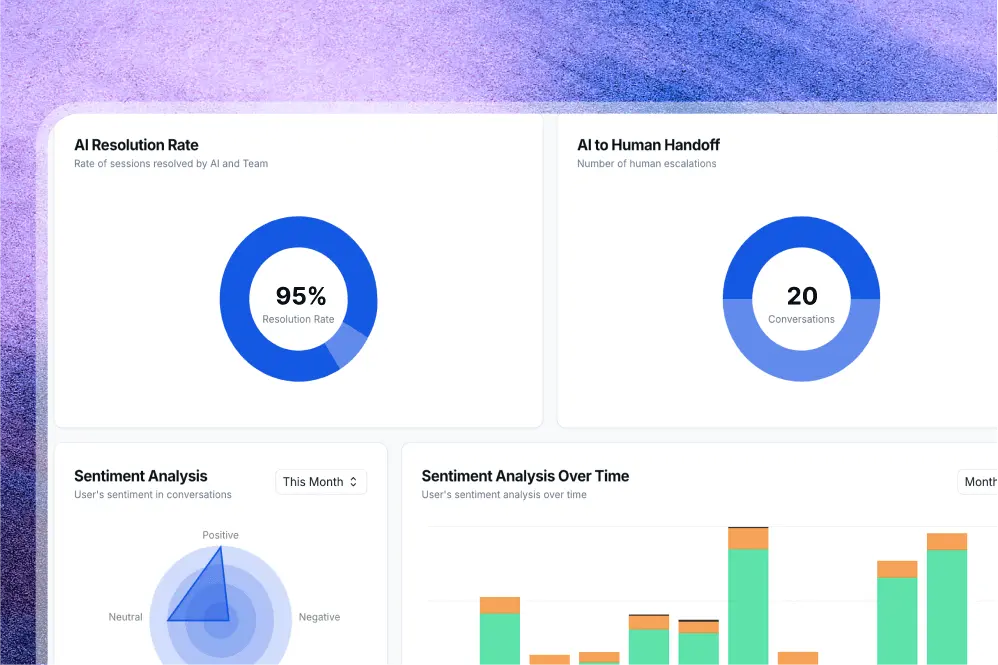
Track how your chatbot performs using the built-in analytics dashboard. Monitor metrics such as conversation volume, resolution rates, common guest questions, and escalation frequency.
As conversations continue, the chatbot improves through supervised learning and feedback, helping hotels refine responses, identify service gaps, and improve overall support quality without rebuilding workflows from scratch.
How long does it take to implement a hotel chatbot? ▼
Basic implementation can be completed in under 1 month. Advanced AI setups with extensive integrations typically take 2–4 months. With platforms like YourGPT AI, you can have a basic chatbot running in minutes and progressively enhance it over time.
Will a chatbot replace my front desk staff? ▼
No. Chatbots handle repetitive, routine tasks, allowing your staff to focus on high-value guest interactions that require human empathy and problem-solving. Most hotels maintain the same staffing levels while dramatically improving service quality and efficiency.
What happens if the chatbot doesn’t understand a guest? ▼
Modern platforms include seamless escalation to human agents when confidence thresholds aren’t met or when guests request human assistance. The full conversation context transfers to staff, ensuring continuity.
How much does a hotel chatbot cost? ▼
Pricing ranges from $100–500+ monthly depending on features, conversation volume, and integrations. Most hotels achieve positive ROI within 3–6 months through cost savings and revenue generation.
Can chatbots work in multiple languages? ▼
Yes. Leading platforms like YourGPT AI support 100+ languages with high-quality translations, enabling seamless communication with international guests.
How do I measure chatbot success? ▼
Track operational metrics (response time, resolution rate), revenue metrics (direct bookings, upsell conversion), and guest satisfaction scores (CSAT, NPS). Compare these to pre-implementation baselines.
Is my guest data secure with a chatbot? ▼
Reputable platforms like YourGPT AI provide GDPR and SOC2 compliance, end-to-end encryption, and secure data storage. Always verify security certifications before selecting a platform.
Can I customize the chatbot’s personality? ▼
Absolutely. Modern platforms allow complete customization of tone, language style, brand voice, and conversational approach to match your property’s unique identity.
What if my PMS doesn’t have an API? ▼
Some platforms offer middleware solutions or manual data synchronization options. However, limited PMS integration significantly reduces chatbot effectiveness. Consider PMS upgrades if your current system severely limits automation possibilities.
How do chatbots handle complex complaints? ▼
Chatbots use sentiment analysis to detect negative emotions and escalate to human staff immediately. They’re not designed to handle complex service recovery — only to triage and route to the appropriate team member with full context.
Conclusion
AI chatbots now handle a substantial portion of guest communication in hotels that have implemented them properly. They respond to booking enquiries outside business hours, manage routine service requests, and provide consistent information across channels. This frees staff to focus on situations that actually require human judgement and personal attention.
The technology works when hotels match chatbot capabilities to real operational gaps. Properties using them successfully focus on specific, high-volume interactions rather than trying to automate everything at once. They start with booking questions and reservation changes, then expand to in-stay requests and pre-arrival communication as the system proves reliable.
Implementation has become more accessible. Platforms like YourGPT allow hotels to train chatbots using existing property documentation, deploy across multiple channels, and monitor performance without technical expertise. What used to require months of custom development can now be tested and refined in weeks.
Guest expectations around response speed and channel availability aren’t reversing. Hotels need systems that can handle communication at scale whilst maintaining service quality. Chatbots provide one practical way to meet that requirement without continuously expanding headcount. The question for most properties isn’t whether to implement one, but which interactions to automate first and how to measure the impact on both operations and guest satisfaction.
Handle Guest Enquiries 24/7 Without Hiring More Staff
Train your hotel chatbot on property docs, deploy across web and WhatsApp, and handle booking enquiries without expanding headcount.
No credit card required • 7-day trial • Setup in minutes

Related posts
18 Lead Generation Strategies & Tactics That Work in 2026