AI Agent Built for Fitness Businesses to Automate Support, Bookings and Lead Capture
TL;DR
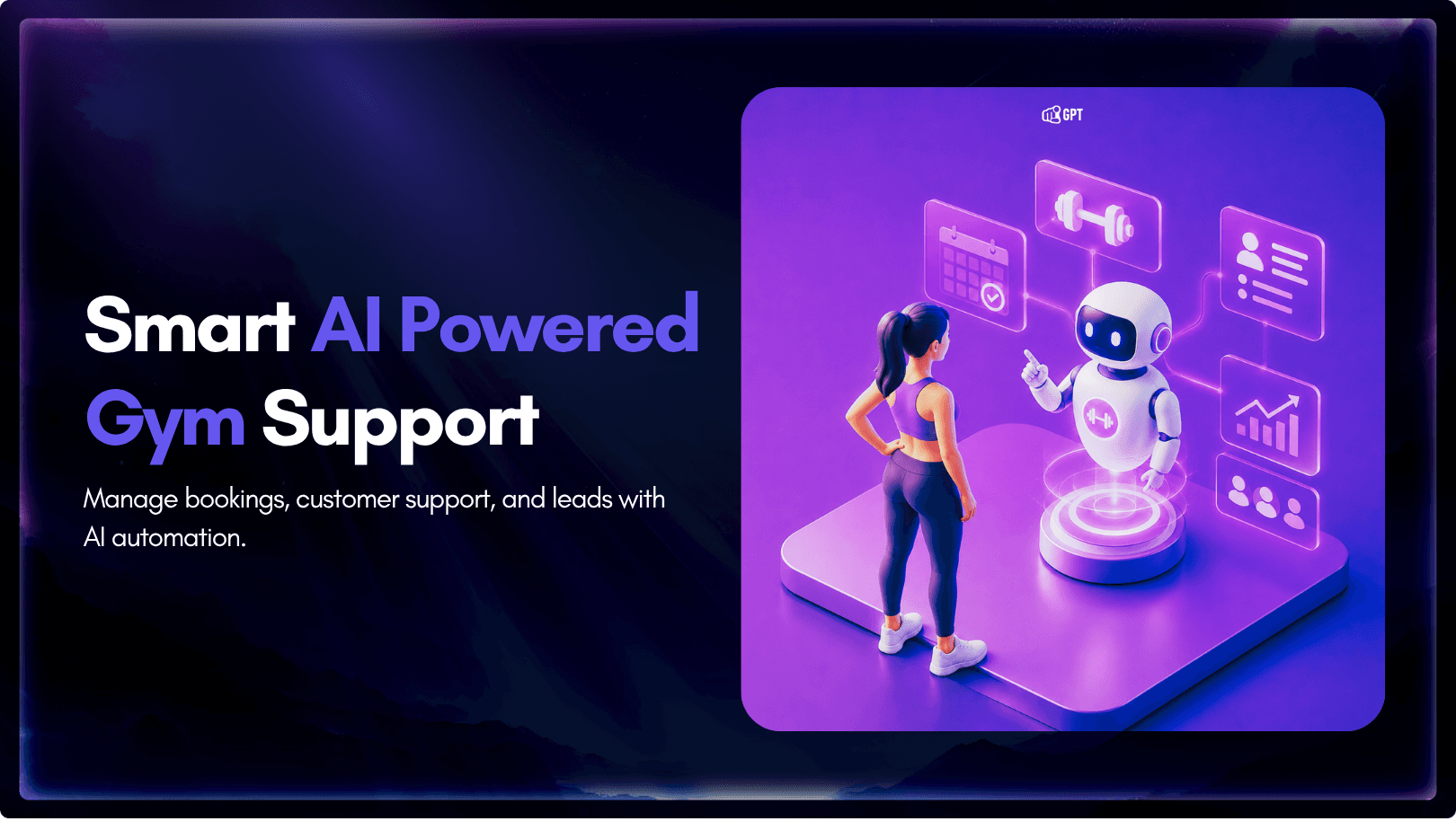
An AI agent for gyms helps fitness businesses capture website leads, answer routine member questions, support trial bookings, guide class enquiries, and hand complex conversations to staff with context. The best setup uses approved business knowledge, clear escalation rules, CRM or workflow connections, and safe human handoff so gyms can reduce missed enquiries, improve booking flow, and support members without overloading the front desk.
An AI agent for gyms can answer routine questions, qualify website visitors, capture leads, support trial bookings, guide class inquiries, and pass useful context to staff when a human needs to step in.
The useful version is not just a smarter FAQ bot. It is a triage layer connected to your website, knowledge base, CRM, booking process, support workflow, and human handoff system.
That distinction matters because gyms do not lose leads only from lack of traffic. They lose leads when visitors wait too long for answers, booking requests need manual follow-up, and staff spend too much time repeating basic information instead of helping prospects take the next step.
A strong gym AI agent should separate requests by volume, risk, and complexity. Low-risk questions such as opening hours, membership basics, class inquiries, and trial rules can be automated. High-value inquiries such as personal training interest or corporate packages should be enriched and routed to staff. Sensitive topics such as refunds, injury concerns, complaints, cancellation disputes, and complex billing should remain human-led.
In this blog, we’ll cover how AI agents for gyms work, why they matter for lead capture, trial bookings, member support, and staff handoff, what features to look for, and how to set one up safely for a fitness business.
What AI Agents Do for Gyms and Fitness Businesses
An AI agent is not a static FAQ page or a form that collects a name and email. It is a conversational layer that sits between your website visitors and your staff.
For gyms, an AI agent can handle a wide range of interactions across the customer journey. It can answer questions from prospects who are still deciding whether to join. It can qualify leads by asking about goals, availability, and interests. It can support members with routine questions about classes, policies, and renewals. And when a conversation requires human judgment, it can escalate with context instead of dropping the visitor into a blank inbox.
The value comes from combining these functions in one system. A visitor asking about personal training should not receive a generic reply and a phone number. They should receive a relevant answer, a clarifying question or two, and a path to book a consultation or speak with a trainer.
That is the difference between an answering machine and an agent.
Where AI Agents Fit in Gym Operations
Most fitness businesses already receive interest from multiple channels. Prospects visit the website, browse the membership page, check class schedules, compare personal training options, look for pricing, and read facility details before they decide to contact the gym.
The problem is that many of these visitors never become leads.
A static contact form asks the visitor to stop, fill in details, and wait. That is a weak experience for someone who may simply want to know whether the gym has beginner-friendly training, whether a trial class is available, whether there are flexible membership plans, or whether they can visit after work.
Timing also matters. Fitness decisions are often emotional and time-sensitive. Someone may start searching after a health concern, a wedding date, a weight-loss goal, a fitness challenge, or a sudden moment of motivation. When that person reaches your website, they are already closer to action than a casual browser.
If the only option is “submit a form and wait,” the lead can go cold before your team even sees it.
An AI agent changes that experience. Instead of forcing visitors to search through pages or wait for a callback, the agent can start a useful conversation, answer common questions, collect lead details, and move the visitor toward a clear next step.
For existing members, the same agent can help with class timings, membership policies, payment questions, renewal information, personal training inquiries, and support requests.
This is why an AI agent is not only a support tool. For gyms, it can support sales, operations, retention, and customer experience at the same time.
Rule Based Gym Chatbot vs Gym AI Agent: What Your Fitness Business Actually Needs
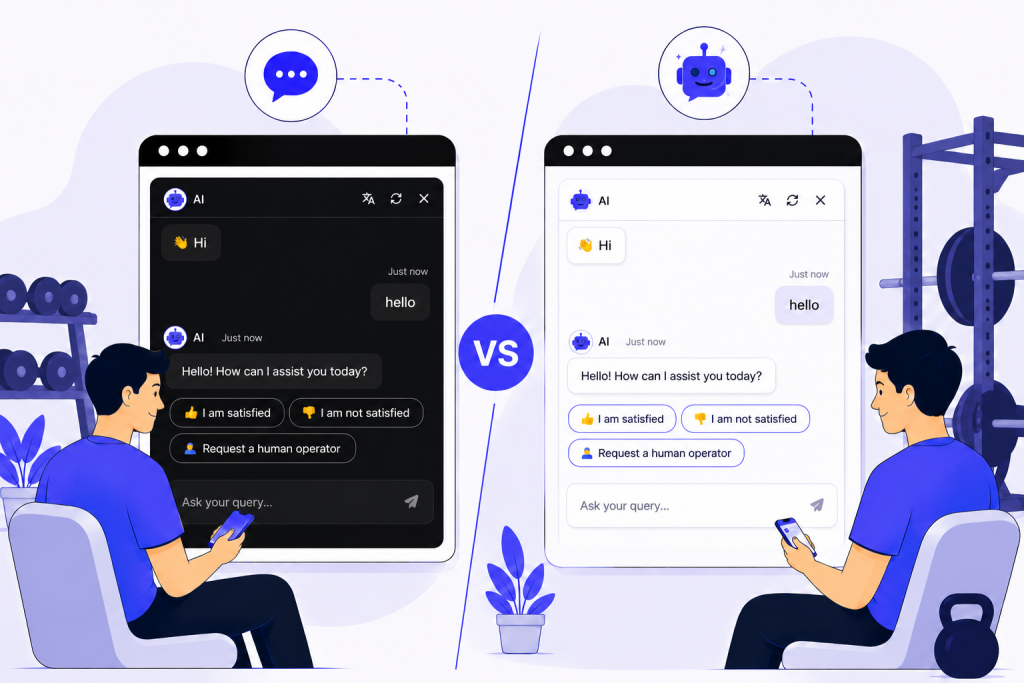
Many tools call themselves AI chatbots, but a chatbot and an AI agent are not the same thing.
A basic gym chatbot usually answers static FAQs. It may help with simple questions such as opening hours, location details, or basic facilities, but it often fails when the visitor needs guidance, qualification, routing, or a real next step.
A gym AI agent does more. It understands visitor intent, answers from approved business knowledge, captures structured lead data, connects with CRM workflows, supports booking handoff, and escalates sensitive conversations to staff.
For a fitness business, this difference is important.
A visitor asking “Do you have personal training?” may be a high-value lead. A basic chatbot may answer yes and stop there. A stronger AI agent asks what the person wants to achieve, whether they are a beginner, what time they prefer to train, whether they want one-on-one coaching, and whether they would like to book a consultation.
That is the difference between answering a question and moving the business forward.
A chatbot replies.
An AI agent replies, qualifies, records, routes, and hands over with context.
What Gym AI Agents Should Never Automate
A gym AI agent should make routine conversations faster, but it should not take control of decisions that require judgment, empathy, approval, or accountability.
The agent should never independently approve refunds, cancellations, discounts, payment disputes, contract exceptions, medical or injury advice, legal questions, disciplinary issues, or serious complaints from upset members.
It should also avoid promising trainer availability, class capacity, membership changes, or booking confirmation unless that information is checked through a live system or confirmed by staff.
These conversations carry higher risk because they affect trust, revenue, safety, and member experience. A frustrated member does not need a generic answer. A person asking about an injury does not need a chatbot acting like a medical professional. A lead asking for a special discount should not receive an unauthorized promise.
The safer approach is to let the AI acknowledge the request, collect basic context, and route the conversation to the right team member.
This gives the member a faster first response while keeping final decisions with the human team.
How Human Handoff Works in a Gym AI Workflow
Human handoff is the point where the AI stops being the main responder and a staff member takes over the conversation.
This should happen when the visitor has a high-value inquiry, a sensitive issue, or a request that needs approval. Examples include personal training interest, corporate membership packages, refund questions, cancellation concerns, billing disputes, complaints, injury-related questions, or unclear membership cases.
A good handoff does not simply say “Please contact our team.” It should pass useful context to staff.
The handoff should include what the visitor asked, what goal they shared, what service they are interested in, which location they prefer, what answer the AI already gave, and what next step the visitor requested.
This helps staff continue the conversation without asking the same questions again.
For example, instead of receiving a message that says “New chat inquiry,” the team should receive something more useful: a visitor is interested in personal training, wants evening sessions, prefers the downtown location, is a beginner, and asked about a trial consultation.
That context makes the follow-up faster, warmer, and more relevant.
The goal of human handoff is not to remove people from the gym experience. It is to make sure staff join the conversation at the right time with the right information.
Why Your Gym’s AI Agent Must Use Approved Business Information
A gym AI agent should not invent answers.
Membership plans, trial rules, class schedules, trainer availability, cancellation policies, freeze terms, offers, and location details can change. If the agent relies on general AI knowledge, it may give outdated or incorrect information.
That is a problem.
A member asking about cancellation terms needs the gym’s actual policy, not a generic answer. A visitor asking about a class needs the current schedule, not an old timetable. A lead asking about pricing needs the correct membership information, not an estimated response.
A reliable gym AI agent should answer from approved business content such as:
- Membership tiers and pricing documents
- Class schedules and trial booking rules
- Personal training packages and trainer details
- Facility information and location-specific details
- Cancellation, freeze, refund, and contract policies
- Current offers, onboarding instructions, and support procedures
When the agent answers, it should use the information provided by the business. This makes the experience more reliable for members and easier for staff to manage. When policies or offers change, the team can update the source information instead of rebuilding the entire assistant.
A reliable gym AI agent should not sound impressive while being wrong. It should be accurate, controlled, and easy to update.e being wrong. It should be accurate, controlled, and easy to update.
Static Answers vs Live Checks: Where Gym AI Needs Real-Time Data
Some gym information can live safely in a knowledge base. Other information needs a live system check.
This distinction matters.
A cancellation policy can be answered from an approved policy document. A facility question can be answered from a gym information page. A membership comparison can be answered from pricing documents.
But live class availability is different. A schedule may change, a class may be full, a trainer may be replaced, or a member may not have the right credits to book.
A serious AI agent treats live operational data as something to check, not something to memorize.
| Need | Better Source | Why It Matters |
|---|---|---|
| Membership policy | Knowledge base | Staff can update the approved policy source. |
| Class availability | Booking system or live integration | The agent needs current capacity. |
| Lead qualification | Conversation flow and CRM workflow | The questions are stable, but lead data is live. |
| Booking confirmation | Booking workflow or staff handoff | The system must confirm availability before committing. |
| Staff escalation | Team inbox or CRM | Humans need the full conversation context. |
This is where an AI agent becomes more valuable than a basic FAQ bot.
It does not just provide text. It supports the operational flow behind the conversation.
How an AI Agent Converts Website Visitors Into Qualified Gym Leads
Capturing a lead is only useful if the team can act on it.
A weak chatbot collects a name and phone number. A stronger AI agent captures the information that helps staff follow up properly.
For a gym, that may include the visitor’s fitness goal, preferred location, preferred training time, interest in personal training, membership type, trial class preference, urgency, objections, and source page.
This matters because two leads with the same contact details can be completely different.
One visitor may be ready to join this week and only needs a trial slot. Another may be comparing three gyms and needs reassurance about beginner programs. Another may be looking for a personal trainer after an injury and should be handled carefully by staff.
A useful gym AI agent turns vague interest into structured intent.
Instead of sending the team a message that says “New website lead,” it can send a richer record: what the visitor asked, what they want, which service they are interested in, when they prefer to train, and what next step they requested.
That improves both conversion and customer experience.
The staff member does not need to restart the conversation. They can continue from the visitor’s actual need.
Why Trial Bookings and Class Inquiries Need to Be Instant
Trial sessions, gym tours, and intro classes are important conversion moments for fitness businesses.
A visitor may be interested, but if booking requires several back-and-forth messages, the opportunity can go cold. The longer the gap between interest and action, the easier it is for the visitor to delay, forget, or choose another option.
An AI agent can simplify this process.
It can ask what the visitor is looking for, collect their preferred time, confirm their interest, and guide them toward a booking or callback. For class inquiries, it can explain class types, help visitors understand which class may suit their goals, and direct them to the right booking path.
Someone asking about yoga classes may need schedule details and a trial option. Someone asking about strength training may need personal training guidance. Someone asking about beginner programs may need reassurance and a clear first step.
The key is to avoid treating every booking inquiry the same.
A first-time visitor, an inactive member, and an active member looking for a class may all ask similar questions, but the right next step is different. A good gym AI agent should understand that difference and route the conversation accordingly.
Support Existing Members Without Overloading Staff
Gym staff often spend a large part of the day answering repeat questions.
Members ask about class timings, membership renewals, payment options, freeze policies, trainer availability, event details, facility rules, and account-related processes.
These questions matter, but they do not always need a human response.
An AI agent can help automate the first layer of member support. It can answer routine questions instantly and route complex cases to staff when needed.
This reduces pressure on the front desk while improving response speed for members.
The benefit is not only operational. It also affects the member experience.
When members get quick answers to simple questions, they feel supported. When staff receive fewer repetitive questions, they can spend more time on in-person service, sales calls, complaints, coaching conversations, and relationship-building.
The goal is not to remove the human team. The goal is to protect their time.
Use AI to Spot Retention Risks Before Members Leave
Many gyms focus heavily on new lead generation, but retention is just as important.
Members rarely leave without warning. In many cases, they disengage first. They stop attending regularly, miss classes, delay renewal, stop responding to messages, or stop feeling connected to the gym community.
An AI agent can help identify and support these moments, especially when connected to the right workflows.
For example, the agent can help answer renewal questions, explain membership freeze rules, guide members toward suitable classes, collect feedback after a poor experience, or route cancellation-risk conversations to staff.
A member asking about cancellation is not just asking a policy question. That may be a retention signal.
A member asking whether they can pause their membership may need a support conversation, not just a policy answer.
A member asking about beginner classes after a long absence may need reassurance, not a generic schedule link.
This is where the AI agent should support the team with context. It can collect the reason, identify the member’s need, and help staff step in at the right moment.
Retention is not only about automated messages. It is about recognizing when a conversation needs care.
High-Impact Gym AI Agent Use Cases
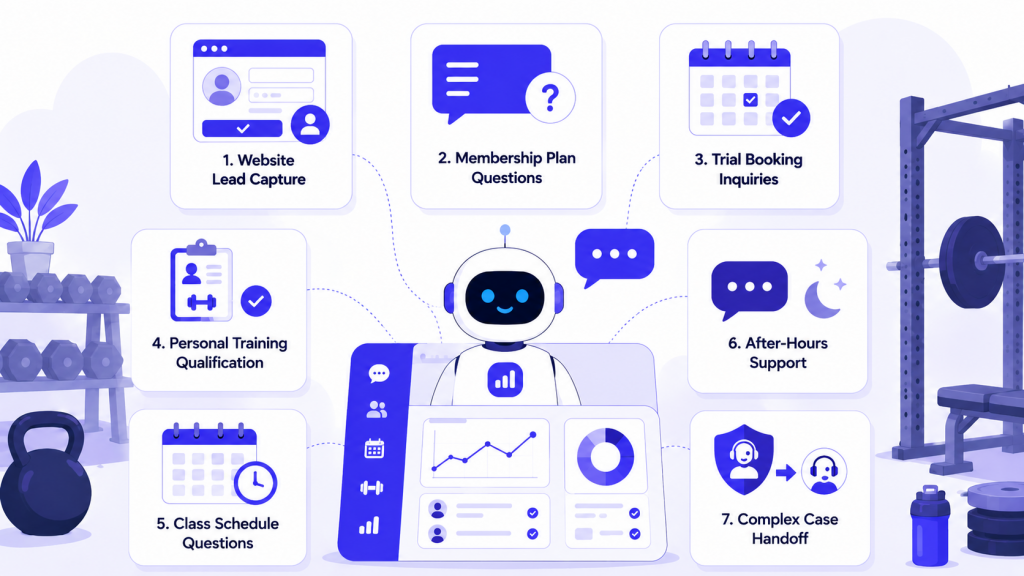
A gym should not try to automate everything on day one. The best approach is to start with use cases that are frequent, valuable, and low-risk.
Start with these high-impact use cases:
- Website lead capture: Convert visitors from pricing, membership, and personal training pages into qualified leads.
- Membership plan questions: Help visitors understand plans, inclusions, trial rules, and joining options.
- Trial booking inquiries: Collect details and guide visitors toward a tour, trial class, consultation, or callback.
- Personal training qualification: Ask about goals, experience level, availability, and preferred training style before routing to staff.
- Class schedule questions: Help visitors and members find the right class or next step.
- After-hours support: Capture inquiries when staff are unavailable and send context to the team later.
- Complex case handoff: Escalate refunds, complaints, billing issues, injury concerns, and sensitive conversations safely.
Once these workflows are working well, the business can expand into renewal support, member reactivation, campaign landing pages, corporate package inquiries, and multi-location routing.
The most valuable use cases usually sit close to revenue or staff workload. A pricing page visitor who starts a conversation is more valuable than a casual homepage visitor. A personal training inquiry is usually more valuable than a basic facility question. A cancellation question may be more important than a routine class timing question because it may signal churn risk.
This is why the first build should be narrow and intentional. A useful gym AI agent should start with the conversations that already cost the team time or revenue, prove value, and improve based on real conversation data.
How to Build an AI Agent for a Gym
Getting your gym’s AI agent live is simpler than most fitness businesses expect. Follow these steps to have a custom AI chatbot running on your website in just a few minutes.
Step 1: Sign up and get inside the dashboard
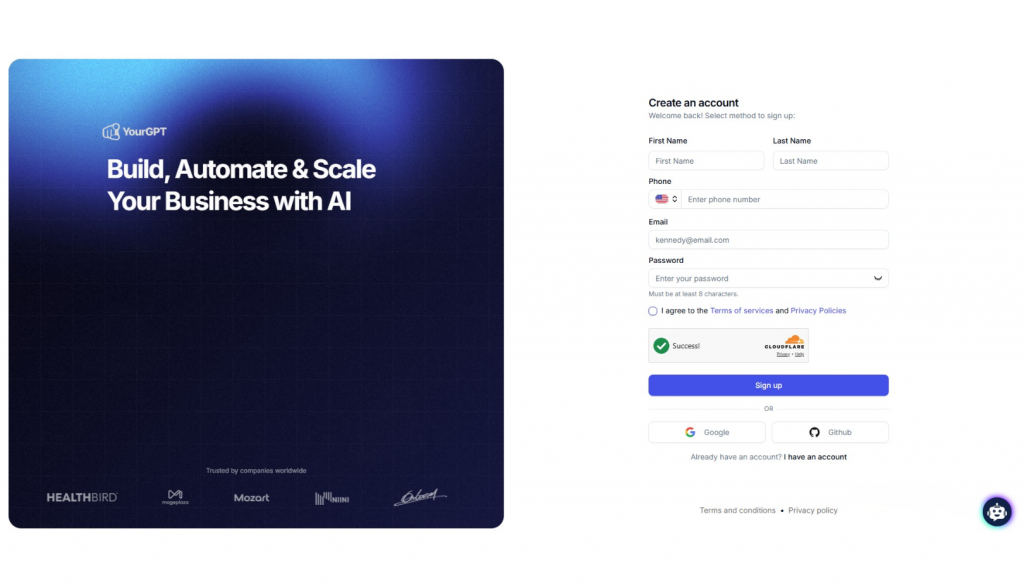
Visit the YourGPT Chatbot and create an account. Once you are in, you can deploy your gym’s AI agent on your website, booking page, or any other channel where members and prospects are already reaching out.
Step 2: Train the agent on your business knowledge

Upload your gym’s training data and train the chatbot without writing a single line of code. YourGPT’s no-code interface lets you add membership plans, class schedules, pricing, personal training packages, facility details, cancellation and freeze policies, trial rules, and any other content your front desk regularly gets asked about. The more relevant your training data, the more accurate and useful the agent will be for your members and prospects.
Step 3: Customize Appearance and Personality
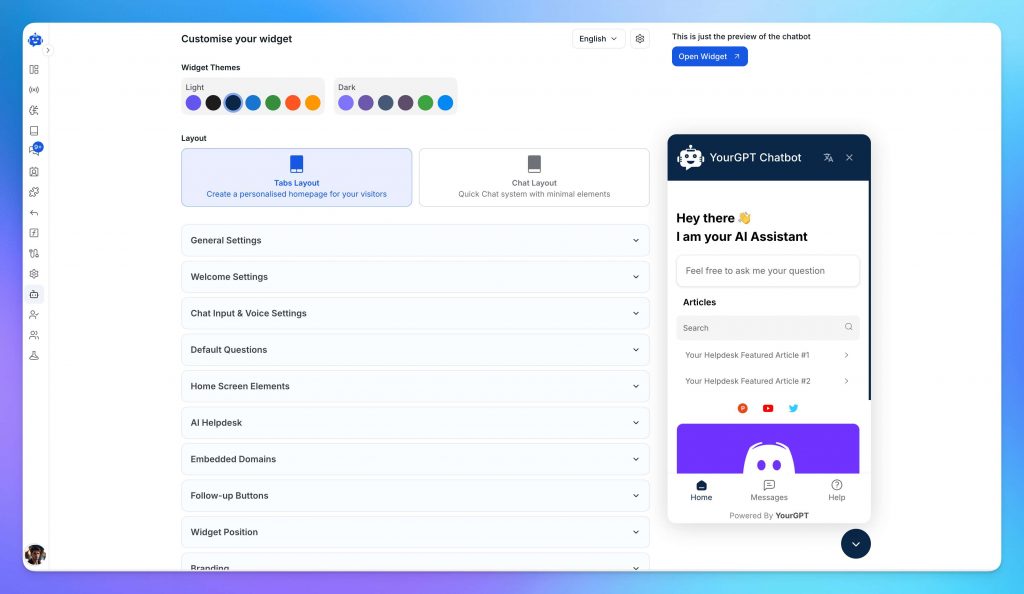
Make the agent feel like your gym. Adjust the chatbot’s look, tone, welcome message, and personality to match your brand. A boutique yoga studio and a high-energy functional fitness gym should not sound the same. Customisation takes minutes and requires no technical skills.
Step 4: Connect Your Agent with Integrations

Embed the chatbot on your gym’s website using a simple code snippet. You can also connect it to your preferred social channels such as WhatsApp, Instagram, or Facebook Messenger so that members and leads can reach you through the platforms they already use. This creates a consistent, omnichannel experience without adding complexity to your team’s workflow.
Step 5: Go Live with Your Agent
Activate your gym’s AI agent and start responding to members and prospects in real time. From the moment it goes live, the agent can handle class inquiries, membership questions, trial booking requests, and after-hours conversations without any manual input from your team.
Step 6: Keep Improving Your Agent
Track performance using built-in analytics and let the chatbot refine its answers through self-learning. Review which questions the agent could not answer, where leads dropped off, which escalations were triggered most often, and how booking requests are converting. Use those insights to update your knowledge base and sharpen the conversation flow over time.
A gym’s offers, schedules, policies, and member questions change regularly. The agent should improve alongside the business, not stay frozen at the version you launched with.
What to Look for in an AI Agent Platform for Fitness Businesses
Not every AI agent platform is suitable for gyms and fitness businesses.
A fitness business needs more than a chatbot that can answer general questions. It needs a platform that can use approved business knowledge, capture leads, support handoff, connect with workflows, and stay controlled as schedules, offers, policies, and staff availability change.
The first thing to look for is knowledge base control. The platform should let the gym train the agent on approved content such as membership plans, pricing, class schedules, trial rules, personal training packages, refund policies, freeze rules, and location details.
The second thing to look for is workflow integration. A useful AI agent should be able to send lead details to a CRM, staff inbox, Google Sheet, webhook, booking system, or internal workflow. Without this, the agent may answer questions but still leave staff with manual follow-up work.
The third thing to check is human handoff. The platform should allow clear escalation rules so sensitive conversations are routed to staff instead of being handled by AI alone.
For multi-location gyms, location-aware routing is also important. A visitor asking about one branch should not receive the wrong schedule, pricing, or staff contact from another location.
The best platform should also include analytics. Gym owners should be able to review unanswered questions, lead quality, booking interest, escalation reasons, and conversation outcomes.
A strong AI agent platform for fitness businesses should be accurate, easy to update, safe to control, and connected to the systems staff already use.
Pre-Launch Checks That Keep Gym AI Safe and Useful
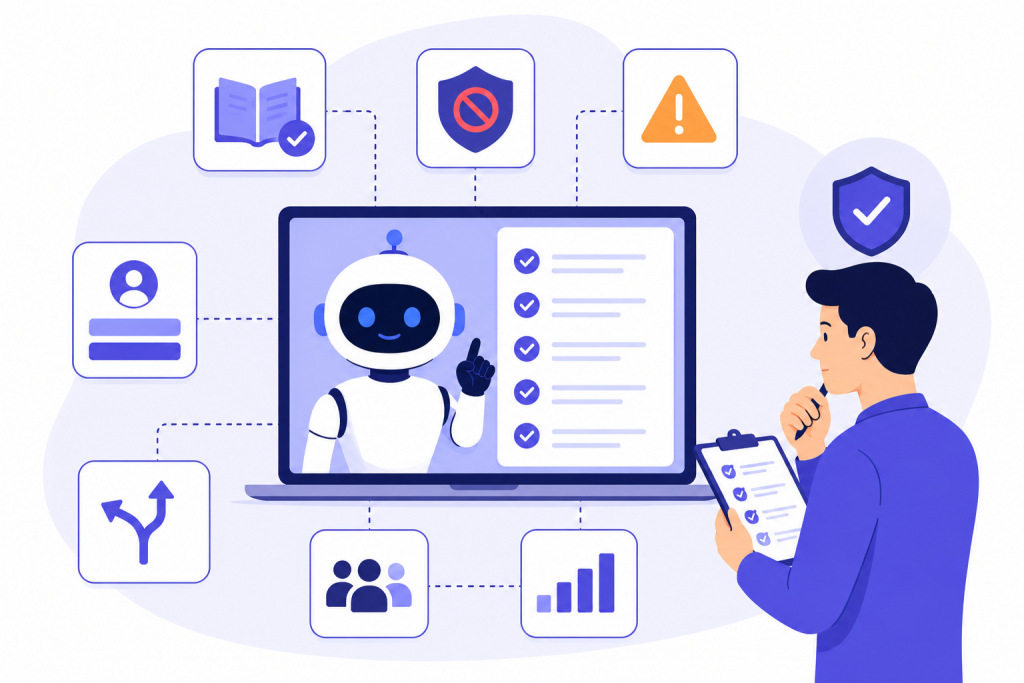
Before launching an AI agent on your gym website, the team should be clear about what the agent can do, what it should avoid, and when it should escalate.
The most important question is not “Can the AI answer?” It is “Should the AI answer?”
A safe launch should define the approved knowledge sources, allowed topics, blocked topics, escalation triggers, lead capture fields, routing rules, and staff ownership after launch.
For example, the agent may be allowed to explain general membership options, but not approve discounts. It may be allowed to explain the freeze policy, but not process a freeze request without staff review. It may be allowed to collect personal training interest, but not promise a specific trainer’s availability unless a live booking system confirms it.
This level of control helps the AI agent represent the business safely.
It also helps staff trust the system. When the rules are clear, teams are less worried about the agent saying the wrong thing and more likely to use it as part of the daily workflow.
How Fitness Businesses Measure ROI From AI Agents
Fitness businesses should measure AI agent ROI by business outcomes, not just message volume.
A high number of conversations does not automatically mean the agent is helping the gym. The better question is whether the agent captures more leads, improves booking flow, reduces repetitive staff work, supports member retention, and gives the team better follow-up context.
The most important ROI signals include:
- Lead capture rate
- Trial booking requests
- Consultation requests
- After-hours inquiries captured
- CRM submission quality
- Staff time saved
- Escalation rate
- Membership outcomes from AI-qualified leads
For example, if the AI agent captures leads outside staff hours, those are opportunities the gym may have missed before. If it answers routine class, policy, and membership questions, it reduces front-desk workload. If it routes cancellation-risk conversations to staff earlier, it may help protect retention.
A simple way to think about ROI is this: additional leads captured, plus bookings influenced, plus staff time saved, plus retention opportunities protected equals AI agent value.
The goal is not to automate the most conversations. The goal is to automate the right conversations and improve the path from interest to action.
Common Mistakes When Deploying AI Agents in Gyms
One common mistake is launching the AI agent with a weak knowledge base. If the agent does not have accurate membership plans, class schedules, pricing details, trial rules, policies, and support instructions, it may give incomplete or unclear answers.
Another mistake is trying to automate too much. Refunds, injury concerns, complaints, billing disputes, cancellation issues, and contract exceptions should not be handled fully by AI. These conversations need human review.
A third mistake is asking visitors too many questions too early. Lead capture should feel natural. If the agent asks for name, phone number, email, location, goal, budget, and schedule before giving any useful answer, visitors may leave.
Some gyms also forget to connect the AI agent to staff workflows. If the agent captures a lead but does not send it to the right CRM, inbox, branch, or staff member, the business still has a follow-up problem.
Another common issue is using the same setup for every location. Multi-location gyms need location-specific schedules, pricing, amenities, offers, and routing rules.
The final mistake is not reviewing conversations after launch. The first version of an AI agent is rarely perfect. Gym teams should review unanswered questions, escalation reasons, lead quality, and booking outcomes so the agent improves over time.
A successful deployment is not just about turning the AI agent on. It is about setting clear rules, connecting the right workflows, and improving the system based on real conversations.
Best AI Agent Platform for Gyms and Fitness Businesses
The best AI agent platform for a gym is not the one that simply answers the most questions. It is the one that helps your business respond accurately, capture higher-quality leads, support your team’s workflow, and hand off sensitive conversations safely.
For fitness businesses, the platform should be able to answer from approved knowledge, collect structured lead details, support CRM or workflow connections, and give staff useful context before follow-up.
The right platform helps gyms and fitness businesses build AI agents for website chat, lead capture, class inquiries, trial booking requests, membership questions, support automation, CRM workflows, and human handoff.
This is useful for gyms that want to reduce missed inquiries, respond faster after hours, improve website conversion, and reduce repetitive work for front-desk and sales teams.
A gym does not need an AI agent that simply talks more. It needs an AI agent that helps visitors take the next step, helps members get answers faster, and helps staff focus on the conversations where human support matters most.
FAQs
What exactly does an AI agent do for a gym that a regular chatbot cannot? ▼
A regular gym chatbot answers static questions like opening hours or location. An AI agent goes further: it understands what a visitor actually wants, answers from your approved business content, qualifies leads by asking about goals and preferences, routes high-value inquiries to the right staff member, and passes along full context when it does. It does not just reply. It moves the conversation forward.
Will the AI agent give members wrong information about our membership plans or policies? ▼
Not if it is set up correctly. The agent answers only from the content you approve and upload, such as your membership tiers, pricing, class schedules, cancellation policies, and freeze rules. It does not guess or rely on general knowledge. When your policies change, you update the source content and the agent reflects that update automatically.
What kinds of conversations should we never let the AI handle on its own? ▼
Refunds, billing disputes, cancellation approvals, injury-related questions, complaints from upset members, discount requests, and any contract exceptions should always go to a human. The agent can acknowledge these requests, collect basic context, and route them to the right staff member, but the final decision should never sit with the AI.
How does the AI know when to pass a conversation to a staff member? ▼
You define the escalation rules during setup. For example, you can instruct the agent to hand off any conversation involving a refund request, a personal training inquiry above a certain level of detail, a complaint, or a cancellation concern. When one of those triggers is met, the agent flags the conversation and sends staff everything the visitor said, so your team can pick up without starting from scratch.
Can the AI agent handle trial bookings and class inquiries, or does it just answer questions? ▼
It can do both. For trial bookings, the agent collects the visitor’s preferred time, location, fitness goal, and contact details, then guides them toward a booking or a callback. For class inquiries, it explains class types, helps visitors find the right fit for their goals, and points them toward the next step. The key is that it does not treat every inquiry the same. A first-time visitor and an existing member asking about classes need different responses.
Can one AI agent support both boutique studios and multi-location gyms? ▼
Yes, but the setup should match the business type. A boutique studio may only need one simple knowledge base, while a multi-location gym needs location-aware answers, branch-specific pricing, schedules, amenities, lead routing, and clear escalation rules.
We have multiple gym locations. Can one AI agent handle all of them without mixing up schedules and pricing? ▼
Yes, but it needs to be set up with location-aware knowledge. Each branch should have its own schedule, pricing, amenities, and staff routing rules inside the agent’s knowledge base. When a visitor mentions or selects their preferred location, the agent should pull from that branch’s specific information only. A visitor asking about your downtown location should never receive the class schedule or pricing from your suburban branch.
How quickly can we get a gym AI agent up and running? ▼
With a platform like YourGPT, you can go from sign-up to live in a matter of minutes. You sign up, upload your gym’s training content, customise the tone and look to match your brand, embed a code snippet on your website, and activate. No coding is required at any stage. The more complete your training content is at the start, the better the agent performs from day one.
How do we know if the AI agent is actually helping the gym, not just generating conversations? ▼
Look at business outcomes, not message volume. The metrics that matter are how many leads the agent captures, how many trial or consultation requests it generates, how many after-hours inquiries it collects that your team would have missed, how much time your front desk saves on routine questions, and whether leads coming through the agent convert into members. Built-in analytics let you track these outcomes and improve the setup over time.
What happens to the AI agent when our offers, class schedule, or membership plans change? ▼
You update the approved content in the knowledge base and the agent reflects those changes going forward. This is why the agent should never be allowed to answer from general AI knowledge. All responses should come from the business content you control. When things change at your gym, the update happens in one place, not across dozens of automated replies.
Conclusion
An AI agent for gyms should do more than answer FAQs.
It should help visitors find the right membership, qualify new leads, support trial bookings, answer routine member questions, update internal workflows, and escalate sensitive conversations to staff.
For fitness businesses, this creates a better customer journey from the first website visit to the first human conversation.
YourGPT helps gyms turn passive website visitors into qualified leads, reduce repetitive support work, improve staff handoffs, and build a more responsive digital front desk.
The result is not a less human gym.
It is a gym where humans spend less time repeating basic answers and more time helping people choose the right path toward their fitness goals.
Build an AI Agent for Your Gym in Minutes
Automate lead capture, trial bookings, membership questions, and support handoff across your website, WhatsApp, and phone, without replacing your team.
Train it on your gym policies, schedules, memberships, and support rules.

Related posts