What is YourGPT AI Copilot Builder?
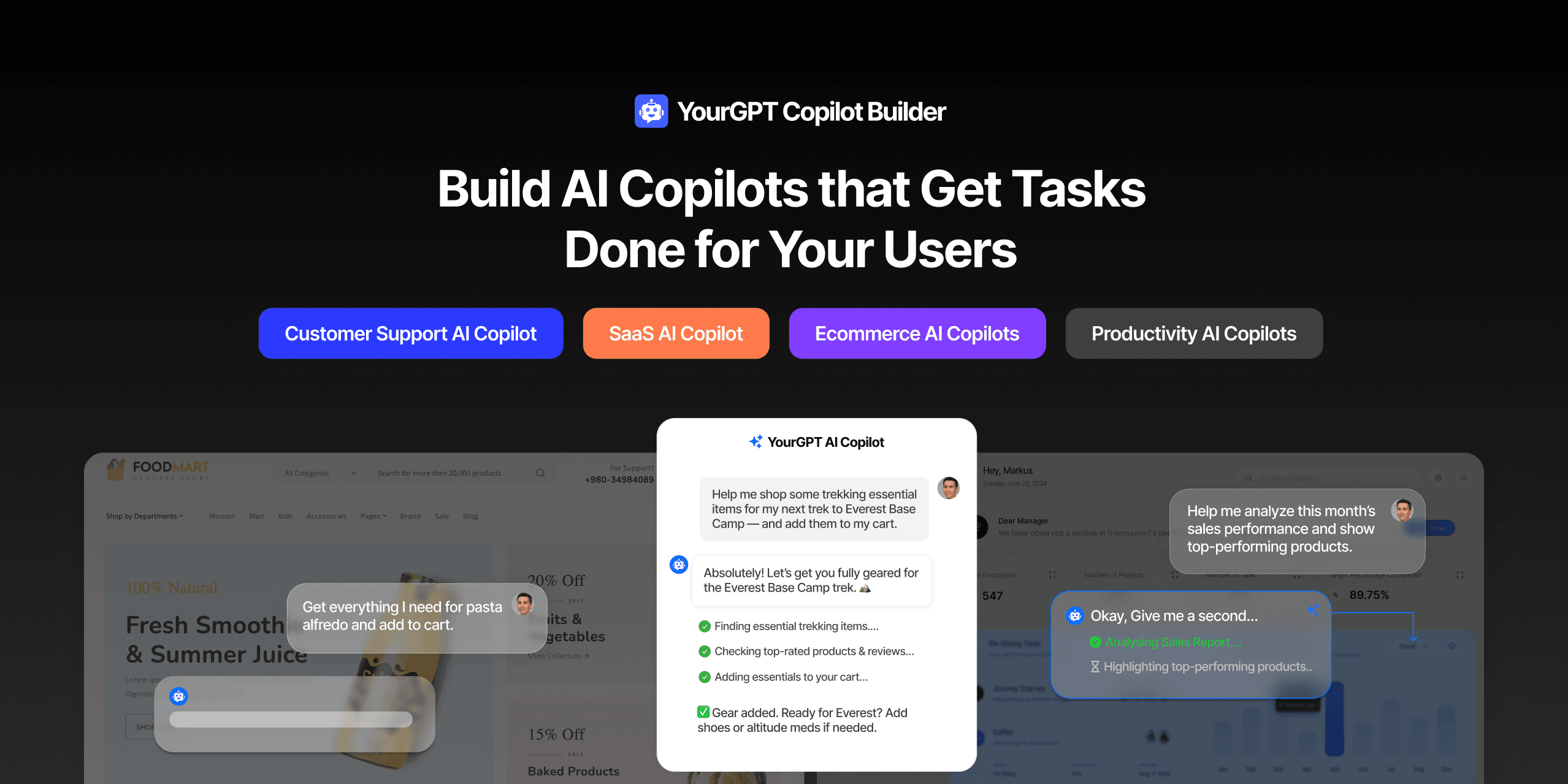
AI can help you finds products but doesn’t add them to cart. It locates account settings but doesn’t update them. It checks appointment availability but doesn’t book the slot. It answers questions about data but doesn’t run the query. Every time, the same pattern: it tells you what to do, then waits for you to do it.
Most AI tools stop at conversation. They understand what you want but can’t execute it. They guide you to the checkout page but don’t complete the purchase. They show you account settings but don’t make the changes. They find available appointments but don’t book them.
The gap isn’t understanding. It’s execution inside your product.
What if your AI didn’t just answer questions? What if it could interact with your product directly—query your database, update your UI, process transactions, modify records, and complete workflows from inside your system?
That’s what YourGPT AI Copilot Builder does. It brings AI into your product that executes tasks.
What is YourGPT AI Copilot Builder?
YourGPT AI Copilot brings an Action Oriented AI Agent into your product that focuses on getting things done. It understands what the user needs and moves each step forward with precision.
A regular chatbot can answer questions and show search results, but the user still has to sort through options, choose a product, add it to the cart, and finish checkout on their own.
With a Copilot Builder using YourGPT, the entire process is automated. When the user makes a request, the AI not only searches your catalog and presents the best matches, but also adds the selected item to the cart and guides them through the checkout process. It’s one seamless conversation from start to finish.
This works smoothly into e-commerce platforms, SaaS dashboards, booking systems, customer portals, and internal workflows across your product. Your copilot can:
- search databases
- update settings
- process orders
- modify user accounts
- run backend workflows
- take actions on frontend
Everything depends on the actions you define.
How It Actually Works
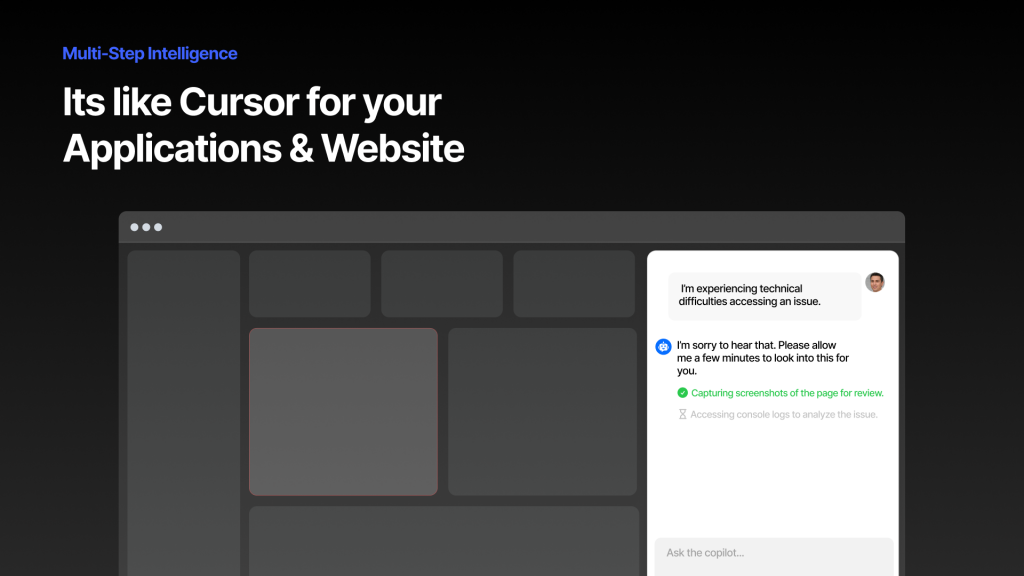
You define the actions the copilot can perform in your product. These actions connect to your existing systems such as your website, your app, and your backend services.
When a user starts a conversation, this happens:
1. Understanding the Request
When someone says “I need running shoes for a marathon,” the copilot identifies this as a product search with specific intent. It supports text, voice, and images. A user can type their request, speak it, or send a photo.
2. Planning the Actions
The copilot maps out the next steps: search the catalog, apply relevant filters, present the best matches, then wait for the user to choose before adding the item to the cart. It completes this within seconds.
3. Executing Tasks
The copilot carries out the required actions and passes data between them. It queries your database, narrows results based on the criteria, shows options to the user, and when they choose one, adds it to the cart without requiring multiple clicks through pages.
4. Confirmations
The copilot knows which actions are safe to run automatically (like searching or showing information) and which ones need approval first. It only interrupts when necessary.
Throughout this process, the copilot maintains context. It keeps track of what was discussed, which actions it performed, and what the user wants to accomplish.
What Copilots Can Do
The use case for your copilot depends on the actions you define. Here are common use cases showing what’s possible:
1. Navigate and Guide Users
Your copilot can answer questions and instantly take users to the exact page or section they need. Instead of explaining where to find something, it opens the right page automatically.
What this looks like:
- User asks “What’s the pricing look like?”
- Copilot responds and navigates them directly there
- Works for settings, features, documentation, or any part of your product
2. E-commerce: Complete Purchase Flows
Your copilot can handle entire purchase flows. From product discovery to cart management to checkout, it executes each step based on what the user wants.
The user describes what they want to build, the copilot understand the intent and then searches the catalog to surface the most relevant options, adds the items the customer chooses directly into the cart, and finally completes the checkout once the customer confirms the order.
3. Productivity: Automate Task Management
Instead of users clicking through project boards and forms, your copilot updates tasks, changes statuses, and manages workflows based on natural language requests.
The copilot becomes your team’s task manager, handling administrative work automatically.
4. Travel: Plan and Book Itineraries
Your copilot can plan trips, recommend destinations, search availability, and handle bookings. It processes complex requests with multiple requirements.
Example interaction:
- User: “Help me plan my room for next bali trip, from 2nd august to 30th august, choose the room by your own, my budget is $1000”
- Copilot understands: destination (Bali), dates (Aug 2-30), budget ($1000), needs room selection
- Searches available accommodations
- Recommends options within budget
- Books selected room when confirmed
Multi-step planning that would normally require navigating multiple pages happens in one conversation.
These are common use cases. Your copilot’s capabilities depend on the actions you define for your specific product and business needs.
How to Build a Copilot for Your Business
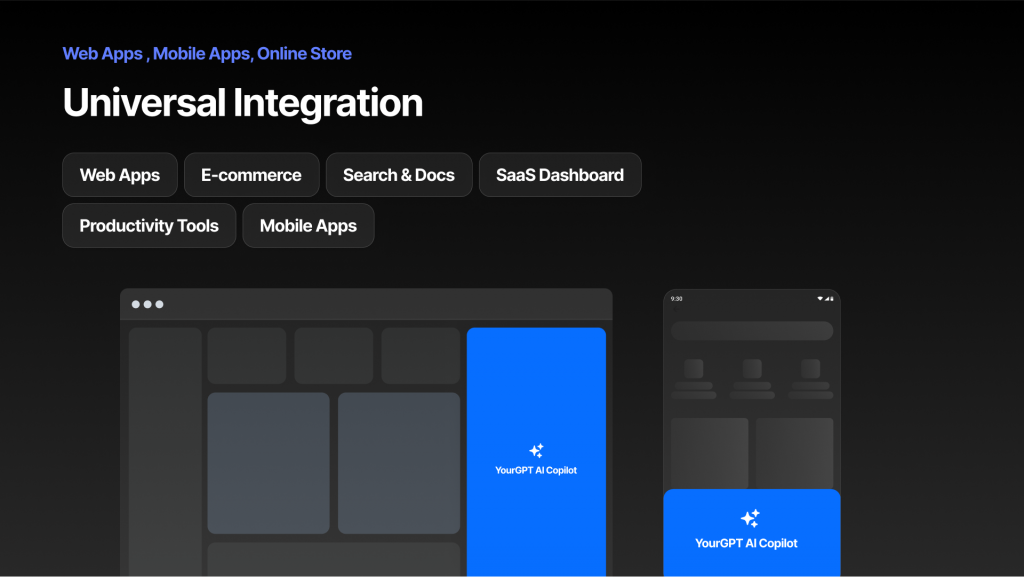
To integrate YourGPT AI Copilot Builder into your product using our SDK (currently available for JavaScript, React, and more).
You’re not adding a chatbot. You’re embedding a intelligent copilot inside your product that knows your product and executes tasks the way you define them. It’s built into your product, working with your existing infrastructure.
Setting up a copilot involves three main steps: registering actions, integrating the SDK, and defining what happens when those actions run.
What You Need
- YourGPT account with Agent Mode enabled
- Your widget ID (from dashboard)
- JavaScript or React web app
1. Registering Actions
In your YourGPT dashboard (Widget Section → AI Copilot Actions), register each action your copilot can perform:
{
  "actionId": "addToCart",
  "description": "When the user asks to add an item to the cart",
  "parameters": ["productId", "quantity"]
}This tells the AI when to use this action. The parameters define what data it needs.
2. Integrating the SDK
You add YourGPT powered Copilot to your product using our JavaScript or React SDK. The integration is minimal:
import { YourGPT } from "@yourgpt/widget-web-sdk";

await YourGPT.init({ widgetId: "your-widget-id" });3. Define Action Handlers
Register what happens when each action gets called:
const copilot = YourGPT.getInstance();

copilot.registerAIAction("addToCart", async (data, helpers) => {
  const { productId, quantity } = data;

  // Your code to add items to cart
  await addItemToCart(productId, quantity);

  helpers.respond("Added to cart!");
});For actions that modify data or process transactions, add confirmations:
copilot.registerAIAction("processPayment", async (data, helpers) => {
  const confirmed = await helpers.confirm({
    title: "Process Payment",
    description: `Charge $${data.amount} to your card?`
  });

  if (confirmed) {
    await processPayment(data);
    helpers.respond("Payment processed successfully.");
  }
});Once integrated, open your product and test the copilot by making requests. Monitor all executed actions in your dashboard’s Conversations tab.
Need help getting started? Check out our AI Copilot SDK Guide or join our Discord community for support
Conclusion
Remember the gap we started with? AI that answers but doesn’t act. YourGPT AI Copilot Builder closes that gap.
Support teams spend hours walking users through processes the software should handle automatically. Sales are lost because checkout takes too many steps. Onboarding stretches for weeks because features require training to use.
These aren’t user problems. They’re product design problems that traditional interfaces can’t solve. Adding more buttons, clearer labels, or better documentation still requires users to figure out where to click and what to do next.
YourGPT AI Copilot Builder solves this differently. When your product can execute tasks through conversation, complexity stops being a barrier. New users complete advanced workflows on day one. Support volume drops because the copilot handles what previously required human intervention. Revenue increases because completing a purchase becomes as simple as saying what you want.
The products that win in the next five years won’t be the ones with the most features. They’ll be the ones where users can actually use those features without needing to learn how.

Related posts


YourGPT 2.0: Complete Platform Overview
Custom Telegram GPT Bot Building Guide (Guide)
